Saray Cumhuriyet Mahallesi Şehit Ali Aktaş Caddesi 23/D Pursaklar/Ankara
  +90 312 496 51 91
  info@aktifkonferans.com.tr


How to Use Simultaneous Interpreting Equipment?
Professional simultaneous interpretation systems are needed at international events to ensure that participants speaking different languages can comfortably follow the same program. Used in congresses, conferences, seminars, diplomatic meetings, corporate events, and international panels, these systems provide real-time translation of the speaker's words into various languages. For this process to proceed correctly, simultaneous interpretation equipment must be professionally set up and used correctly.
Simultaneous interpretation equipment is not simply comprised of headphones and receivers provided to participants. The interpretation booth, interpreter microphone, headphones, transmitter systems, receivers, channel management, sound system connections, and technical control infrastructure form the core components of this system. The correct use of each piece of equipment ensures that the translation reaches participants uninterrupted and clearly.
Incorrect setup or misuse of simultaneous interpretation equipment can lead to serious communication problems during the event. Participants may not be able to hear the translation, may select the wrong language channel, experience sound interruptions, or the interpreter may not be able to hear the speaker clearly enough. Therefore, technical planning and correct use are of paramount importance in simultaneous interpretation systems.
Aktif Conference provides professional simultaneous interpretation equipment, interpretation booths, receiving systems, headphones, and technical support services for congresses, conferences, meetings, and international organizations, ensuring the reliability of the communication infrastructure of events.
What are Simultaneous Interpretation Devices?
Simultaneous interpretation devices are technical equipment that enables the speaker's speech to be simultaneously translated into another language and transmitted to the participants. These devices allow interpreters to listen to the speech, transfer the translation to the system, and enable participants to listen to this translation in their own language.
A professional simultaneous interpretation system generally consists of the following equipment:
- Interpretation booth
- Interpreter headphones and microphone
- Transmitter systems
- Receiver devices
- Participant headphones
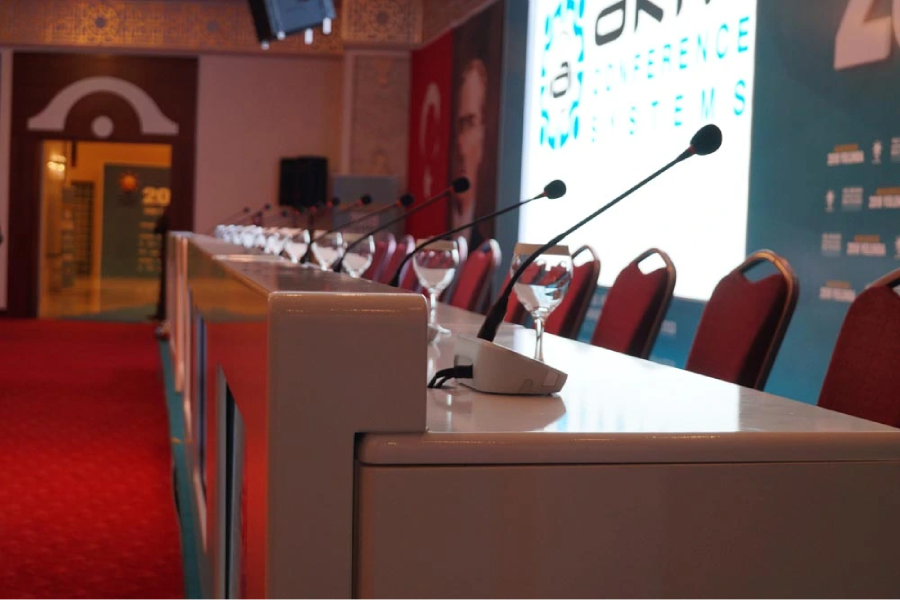
- Microphone systems
- Technical control and sound management equipment
All of this equipment must work together harmoniously. The speaker's voice must be clearly captured, transmitted to the interpreter in a clear manner, and the interpreter's translation must be transmitted to the participants through the correct channel. Any disruption in this chain can directly affect the quality of the translation.
How Does a Simultaneous Interpretation System Work?
A simultaneous interpretation system works on the principle of transmitting the speaker's voice to the interpreter, and the interpreter's translation being conveyed to the participants. Because this process happens in real-time, the system needs to be technically stable.
During the event, the speaker speaks through a microphone. This voice is transmitted to the interpretation booth via the sound system. The interpreter listens to the speaker's voice through headphones and simultaneously translates into the target language. The interpreter's translation is transmitted to the transmitter system via the microphone. The transmitter system sends this sound to the receiver devices used by the participants.
Participants listen to the translation through their assigned receiver devices and headphones. If there are multiple languages in the event, channel selection is made on the device. For example, if an event has Turkish, English, and Arabic language options, a separate channel can be defined for each language. Participants follow the event by selecting the channel appropriate to their language.
Thanks to this system, the speaker doesn't need to stop. Since the translation is done simultaneously, the event flow continues uninterrupted.
How Do Participants Use Simultaneous Interpretation Devices?
Simultaneous interpretation devices are quite simple to use for participants. Receiver devices and headphones are distributed to participants at the event entrance or inside the hall. Participants connect the headphones to the receiver device and turn it on. Then, they select the language channel to be used in the event and begin listening to the translation.
Channel selection should be communicated to participants by the organizing team before the event. For example, instructions such as "Channel 1 for English translation, Channel 2 for Turkish translation" could be given. This information allows participants to quickly select the correct language.
There are some simple usage details that participants should pay attention to. The device's volume should be adjusted according to personal listening comfort. The headphones should be worn correctly, and the device should be turned off. If no sound is received, the channel selection, headphone connection, or battery status of the device should be checked.
In professional organizations, the technical team provides participants with brief usage instructions during device distribution. This prevents potential usage problems before the event begins.
How Do Interpreters Use Simultaneous Interpreting Equipment?
In simultaneous interpretation systems, the equipment used by interpreters is more comprehensive than that of the participants. The interpreter uses special headphones, a microphone, and a control panel inside the interpretation booth. With this equipment, they listen to the speaker, translate, and transmit the translation to the relevant language channel.
First and foremost, the interpreter must be able to hear the speaker's voice clearly through their headphones. The sound level should not be too low or too high. A speech that is not clearly audible can negatively affect the quality of the translation. Therefore, the interpreter's headphones, microphone, and channel system must be tested before the event.
When using the microphone, the interpreter should maintain a balanced sound level. A microphone too far away can result in low-volume translation, while a microphone too close can cause distortion and crackling. The technical team should adjust the interpreter's microphone level before the event.
If there is more than one language channel at the event, it should be clarified in advance which channel the interpreters will be translating on. To avoid channel confusion, channel information should be clearly indicated at the interpreter's desk or in the technical control area.
How to Use the Interpreting Booth?
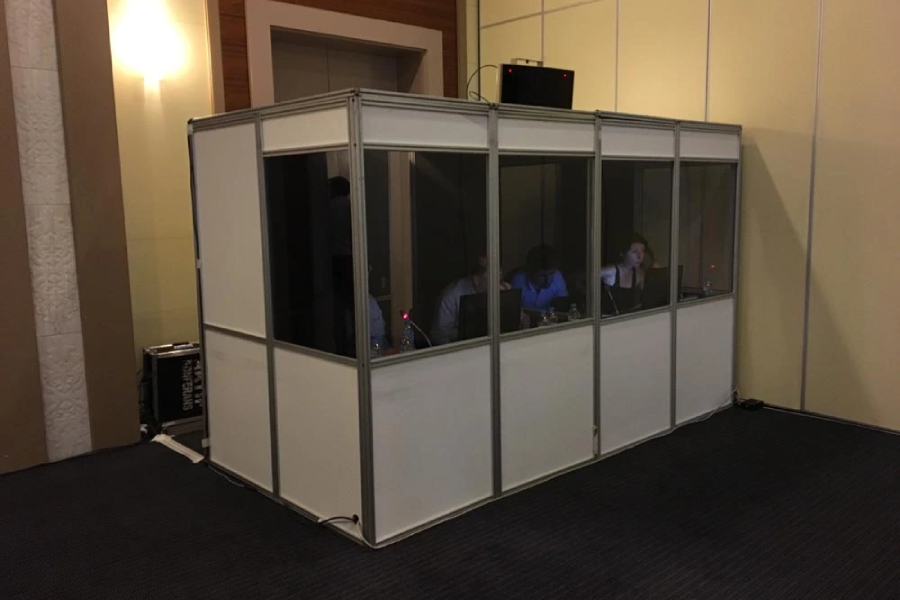
The interpreting booth is a dedicated space that allows simultaneous interpreters to work without being disturbed by external noises. Inside the booth, interpreters will find headphones, a microphone, a control panel, and a workspace. Proper use of the booth is crucial for translation quality.
The interpreting booth should be positioned so that the interpreter can see the stage and the speaker. The interpreter should be able to follow not only the sound but also the speaker's facial expressions, the flow of the presentation, and scene transitions. These details improve translation quality, especially in panels, conferences, and seminars.
Unnecessary noise should be avoided inside the booth. Interpreters should not be distracted, and side conversations should not occur while the microphone is on. Furthermore, the booth's ventilation, lighting, and table arrangement should be suitable for long-duration events.
A professional technical team completes the booth setup before the event and tests all connections. Interpreters should be admitted to the booth before the event begins for sound checks.
Points to Consider Receiving Devices and Headphones
The receiving devices and headphones used by participants are the most visible parts of the simultaneous interpreting system. The proper functioning of these devices is crucial for participant satisfaction.
Before the event, the charge or battery status of all receiving devices should be checked. Headphone connections should be secure, and devices should be set to the correct channel frequencies. During device distribution, ensure that each participant receives a working headset and receiver device.
Participants can adjust the volume to their liking while using the device. However, listening at very high volume for extended periods can be disturbing. Therefore, the volume of the devices should be balanced.
At the end of the event, devices should be collected in an orderly manner. A device return point should be determined in advance, and participants should be informed. In professional organizations, the device distribution and collection process is monitored by the technical team or designated personnel.
How to Select a Channel?
In simultaneous interpretation systems, channel selection is of great importance in events where multiple languages are used. A separate channel is defined for each language. Participants listen to the translation by selecting the appropriate channel for their language via the receiving device.
For example, the following structure can be used in a conference:
Channel 1: Turkish
Channel 2: English
Channel 3: German
Channel 4: Arabic
This channel information should be announced to participants before the event begins. Information cards provided at the entrance, hall screens, or announcements can help with this.
To ensure correct channel selection, the technical team should test all channels before the event. Incorrect channel routing or the use of mixed frequencies can cause attendees to listen to the wrong language. Therefore, channel management should be professionally planned.
How to Set Up Simultaneous Interpreting Equipment?
The setup of simultaneous interpreting equipment begins with a technical analysis of the event venue. The size of the hall, the number of participants, the number of languages spoken, the speaker arrangement, the stage location, and the sound system infrastructure are all evaluated.
First, the location of the interpreting booth is determined. The booth should be placed in a location where the interpreter can see the speaker and where technical connections can be easily made. Then, the microphone systems, audio connections, transmitter devices, and receiver channel infrastructure are set up.
After the setup is complete, a system test is performed. It is checked whether the sound from the speaker's microphone reaches the interpreter clearly. It is tested whether the interpreter's translation is transmitted to the receiver devices through the correct channel. The sound level, clarity, and signal quality should be checked for each channel.
It is very important to conduct a technical rehearsal before the event begins. During this rehearsal, the speaker's microphone, interpreter booth, receiver devices, and headphones are tested together. This allows for the identification of potential technical problems during the event.
Why is Technical Support Important?
Simultaneous interpreting systems are technically sensitive systems. A minor connection issue, incorrect channel setting, or device malfunction can prevent participants from hearing the translation. Therefore, professional technical support is essential throughout the event.
The technical team sets up the system, tests the devices, supports the distribution of participant devices, and monitors the system throughout the event. They provide quick intervention in case of possible sound interruptions, channel problems, or device malfunctions.
Technical support is indispensable, especially at large congresses, international meetings, and multilingual conferences. In such organizations, the simultaneous interpretation system is the fundamental communication infrastructure of the event. Any malfunction in the system directly affects the quality of the event.
Most Common Mistakes in Simultaneous Interpretation Device Use
Simultaneous interpretation devices work very efficiently when used correctly. However, some usage errors can lead to problems during the event.
One of the most common mistakes is selecting the wrong channel. When a participant does not select the channel appropriate for their language, they cannot hear the translation or listen to a different language. Therefore, channel information should be clearly provided.
Another mistake is not fully plugging the headset into the device. Even a simple connection problem can prevent sound reception. Furthermore, failure to check the battery status of the devices beforehand can lead to device shutdowns during the event.
On the interpreter's side, incorrect microphone usage, low volume, or unclear speaker voices can affect translation quality. Technical testing before the event is essential to prevent these problems.
Active Conference and Professional Simultaneous Interpretation Equipment Usage
The correct use of simultaneous interpretation equipment directly affects the communication quality of the event. Therefore, the system must be installed with high-quality equipment and managed by an experienced technical team.
Active Conference offers professional simultaneous interpretation equipment rental services for congresses, conferences, meetings, seminars, and international organizations. Interpretation booths, receivers, headphones, microphones, transmitter systems, and channel management are planned according to the event's needs.
From installation to technical testing, from equipment distribution to operational support throughout the event, the entire process is managed professionally. This allows participants to follow the speeches seamlessly in their own languages, and the organization achieves a more efficient communication structure.
Seamless Communication in Multilingual Events with the Right Equipment
Simultaneous interpretation devices are crucial technical systems that enable participants in multilingual events to follow speeches in real time. These devices need to be set up correctly, used with the correct channel configuration, and monitored by the technical team throughout the event.
While using the receiver device and headphones may seem simple to participants, the system has a professional technical infrastructure behind it. The simultaneous interpretation process proceeds seamlessly when the interpretation booth, microphones, transmitter systems, channel settings, and sound controls work together.
Therefore, the use of simultaneous interpretation devices should be handled professionally when planning a congress, conference, meeting, or international event. With the right equipment, correct setup, and experienced technical support, communication in multilingual events becomes clearer, more organized, and more effective.