Saray Cumhuriyet Mahallesi Şehit Ali Aktaş Caddesi 23/D Pursaklar/Ankara
  +90 312 496 51 91
  info@aktifkonferans.com.tr


Simultaneous Interpretation in Eskişehir
Eskişehir, with its university structure, academic activities, industrial establishments, cultural and artistic organizations, and corporate meetings, is one of the cities that can host events of varying scales. Congresses, conferences, panels, workshops, training programs, and international meetings held in the city may feature foreign speakers or participants from different languages. In this case, a professional translation infrastructure is needed to ensure the event is understood correctly.
Eskişehir simultaneous interpretation service allows the speaker's presentation to be instantly translated into different languages without interruption. While the speaker continues speaking at their natural pace on stage, the interpreter translates the speech into the target language. Participants, using the receiver devices and headphones provided, select the relevant language channel and follow the event in their own language.
This system provides a significant advantage, especially in organizations where time management is crucial. In consecutive interpretation, the speaker needs to pause at certain intervals and wait for the translation to be completed. In simultaneous interpretation, since the speech and translation proceed simultaneously, the program flow is not disrupted, session durations are not unnecessarily extended, and participants can follow the content without interruption.
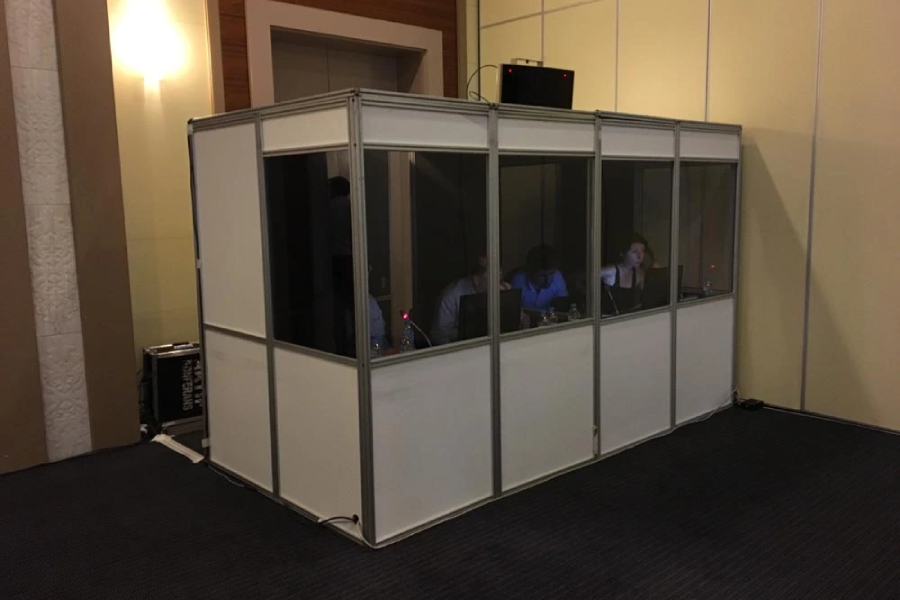
However, simultaneous interpretation service is not limited to interpreter support alone. Speaker microphones, translation booth, interpreter console, transmitter system, language channels, receiver devices, headphones, and technical support should all be planned together. If this infrastructure is not properly established, translation quality may decrease, or participants may not receive uninterrupted translation.
In Eskişehir, Simultaneous Translation is Used in Which Organizations?
The need for simultaneous translation in Eskişehir can arise in various types of events. University-related academic meetings, international conferences, scientific congresses, industry seminars, municipality-supported cultural programs, corporate training, and panels with foreign participants are the main areas where this service can be used.
Especially in academic events, presentations by foreign speakers, research results, technical concepts, and question-and-answer sessions must be correctly understood by the participants. If some participants are not fluent in the spoken language, they may not get the full benefit from the event.
A similar need arises in industry and corporate meetings. It is important that information presented in product launches, technical trainings, dealer meetings, or international business collaboration meetings is conveyed completely. In such events, a misunderstood technical detail can directly affect the efficiency of the meeting.
Simultaneous interpretation can be used not only at large conferences but also at meetings with smaller participation but requiring professional communication. Even with a small number of participants, if it is desired that the speeches proceed without interruption, a simultaneous interpretation system can be the right solution.
Simultaneous Interpretation at University and Academic Events
Eskişehir's university identity makes academic events in the city more visible. Symposiums, scientific panels, international workshops, student congresses, and academic presentations may feature speakers from different countries.
In such organizations, simultaneous interpretation does not only mean translating the spoken language. The accurate transmission of academic concepts, research data, methods, and specialized terminology is necessary. Therefore, it is important for interpreters to prepare for the event beforehand.
Presentation titles, speaker information, program flow, and presentation files (if any) should be shared with interpreters before the event. This preparation improves the quality of translation, especially in areas with a high concentration of technical terminology.
Question-and-answer sessions at academic events should also be carefully managed. Participants asking questions without microphones may prevent the interpreter from hearing them. Therefore, questions should be taken with microphones, and all conversations should be included in the main sound system.
Translation Needs in Industrial, Technological, and Corporate Meetings
In Eskişehir, meetings organized within the scope of industrial, manufacturing, technological, and corporate collaborations may include representatives from foreign companies, technical experts, or international participants. The language used in these events is often not just general conversational language; technical product details, production processes, quality standards, and business plans are also conveyed.
In such meetings, a simultaneous interpretation system delivers the speaker's presentation to different language groups without interruption. Participants listen to the presentation in their own languages while the speaker maintains their pace.
Especially in technical trainings, it is crucial to establish a proper translation infrastructure. If the speaker uses video, graphics, product drawings, or application images, it is important for the interpreter to be able to follow this content. The interpreter must see not only the sound but also the context of the presentation.
Confidentiality can also be important in corporate meetings. In closed sessions, the translation should only be heard by the relevant participants. Therefore, the distribution of receiving devices and channel management should be controlled.
How Does a Simultaneous Interpretation System Work?
A simultaneous interpretation system works with a technical chain that delivers the speaker's voice to the interpreter and the interpreter's translation to the participant.
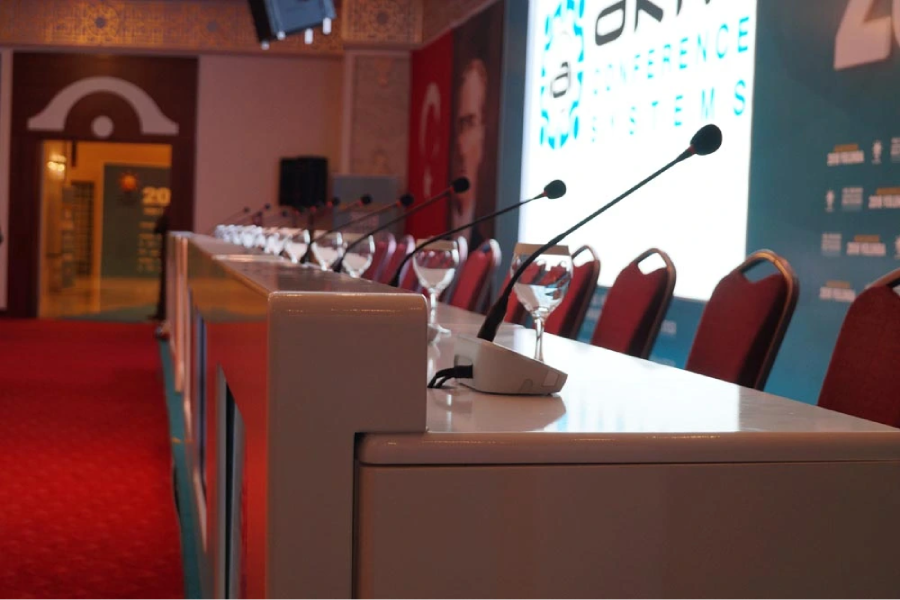
The speaker speaks through a podium microphone, lapel microphone, desktop microphone, or wireless handheld microphone. This sound is transmitted to the main sound system of the hall while simultaneously being sent to the translation booth. The interpreter listens to the speaker through headphones and translates into the target language.
The interpreter's voice is transmitted to the designated language channel. Participants select the relevant channel on their receiver device and listen to the translation through headphones. Thus, while the speaker continues, participants follow the translation in real-time.
The basic flow of the system is as follows:
Speaker microphone → Main sound system → Translation booth → Interpreter console → Language channel → Transmitter system → Participant receiver → Headphones
For this chain to function smoothly, all microphones, connections, language channels, and receiver devices should be tested before the event.
Where Should the Translation Booth Be Located?
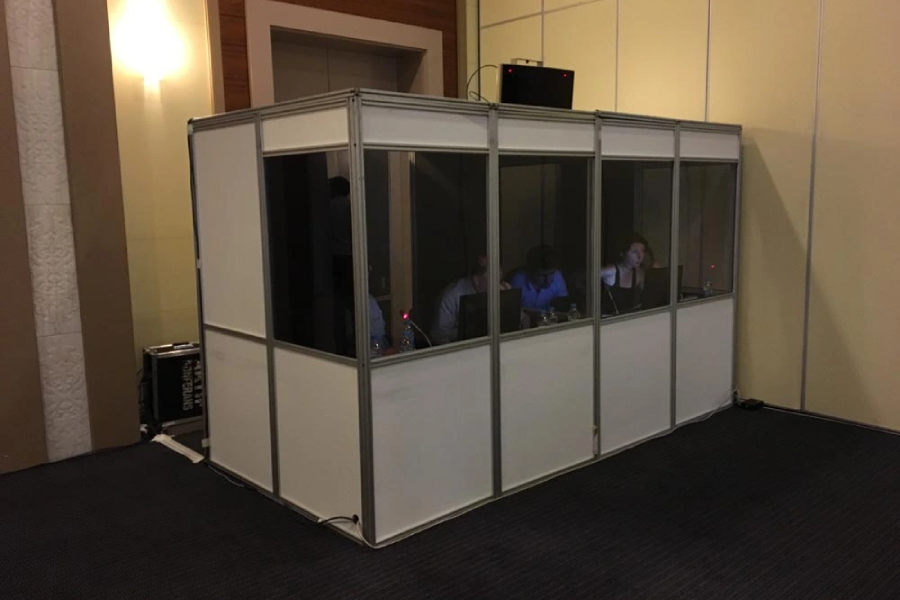
The translation booth is one of the most important parts of the simultaneous interpretation system. It allows interpreters to work without being affected by hall noise and ensures that their translation does not interfere with the hall's sound.
The placement of the interpreter booth should not be solely based on availability. Interpreters need to be able to see the speaker, the stage, and the presentation screen. The speaker's gestures, slide transitions, and developments in the hall affect the context of the translation.
If the booth is to be set up in a location where it cannot see the stage, camera and monitor support should be provided. This allows the interpreter to visually follow the speaker and the flow of the presentation.
The booth should also not obstruct participant passages, block emergency exits, or allow for secure technical connections. Creating a comfortable working environment for interpreters at long-duration events positively impacts translation quality.
How are Language Channels Planned?
In simultaneous interpretation systems, a separate channel is created for each language. For example, an international conference held in Eskişehir might require Turkish, English, and German translation. In this case, a separate channel is planned for each target language.
Participants select the channel corresponding to their language via their receiving devices. However, for this to proceed smoothly, channel information should be clarified before the event.
Registration desk staff, technical team, interpreters, and event organizers should know which language is on which channel. A brief usage explanation should be provided to participants when the device is given, and the channel information should be clearly stated.
Channel confusion can cause participants to think they are not receiving translation, even if the system is working. Therefore, the guidance and information process is as important as the technical setup.
How to Manage the System in Panel and Q&A Sessions?
Panel and Q&A sessions are the sections that require the most careful management in terms of simultaneous translation. This is because speakers change rapidly, questions are taken from the audience, and sometimes more than one person may try to speak at the same time.
All panelists must use microphones. Speeches made without microphones will not reach the translation booth, and therefore translation will not be possible. The moderator should also have an independent microphone.
Participants should be provided with wireless handheld microphones during the Q&A section. If a participant starts speaking before receiving a microphone, the first part of the question may not be heard by the interpreter. This affects both the translation and the answer process on stage.
If the question is asked in a different language, the translation direction should be planned accordingly. In some events, translation is needed not only from the speaker to the participant, but also from the participant to the speaker.
Receiver and Headset Planning
The equipment participants use to follow simultaneous interpretation is receivers and headphones. The number of these devices should be determined according to the number of participants who will use interpretation at the event.
The total number of participants does not always directly indicate the need for devices. Some participants may understand spoken language, while others may need interpretation devices. However, preparing only the exact number of devices needed can be risky. Spare devices should be available for last-minute participation, battery problems, or technical malfunctions.
Device distribution affects the flow of the event. To avoid long queues in the registration area, the device desk should be correctly positioned, sufficient personnel should be assigned, and the device handover process should be carried out in an orderly manner.
The collection points for the devices at the end of the event should also be determined in advance. In halls with multiple exits or crowded conferences, a single collection point may be insufficient.
What Should a Pre-Event Technical Rehearsal Include?
In simultaneous interpretation systems, a technical rehearsal must be conducted before the event. It is not enough to simply see that the system is turned on and working; the entire audio chain, from the speaker to the participants, must be tested.
During the rehearsal, it is checked whether the speaker microphones reach the interpretation booth. Interpreter consoles, headsets, microphones, transmitter systems, and receiver devices are tested. It is verified that each language channel is working correctly.
Signal checks should be performed with receiver devices at different points in the hall. Coverage may be weak in some areas. If this problem is noticed after the event has started, it becomes more difficult to solve.
Presentation videos and panel microphones should also be rehearsed. If a video is to be played, it should be checked whether the video sound reaches the interpreter. Video systems, sound systems, and simultaneous interpretation infrastructure should be tested together in the same flow.
What to Consider When Choosing Simultaneous Interpretation Services in Eskişehir?
When choosing simultaneous interpretation services, it is not sufficient to decide solely based on the number of interpreters or devices. The technical and operational scope of the service should be clearly evaluated.
When requesting a quote, details such as event type, hall information, number of participants, number of languages, session program, panel and Q&A sections, presentation and video usage should be shared.
The main points to consider are:
- Is the translation booth included in the service? Is an interpreter console and technical infrastructure provided?
- How many receiver devices and headphones will be provided?
- Is there a backup device plan?
- Are language channels planned in advance? Will the technical team be on-site throughout the event?
- Will a connection be established with the main sound system?
- Will video audio be transferred to the translation booth?
- Are installation, testing, and dismantling services included?
Getting clear answers to these questions will reduce potential technical problems on the day of the event.
Professional Simultaneous Interpretation in Eskişehir with Aktif Conference
Aktif Conference offers professional simultaneous interpretation system solutions for congresses, conferences, panels, seminars, academic meetings, corporate training, and international events held in Eskişehir.
The number of languages in the event, the hall structure, participant capacity, and program flow are evaluated to plan the needs for the translation booth, interpreter console, transmitter system, receiver device, and headphones.
Necessary connections are established with the main sound system to ensure that speaker, panelist, video, and Q&A audio reach the translation booth clearly. If necessary, video support can also be planned to allow interpreters to follow the stage flow.
Following setup, language channels, microphones, receivers, and hall coverage are tested. Throughout the event, the technical team monitors the system, supports device distribution, and addresses any potential technical problems.
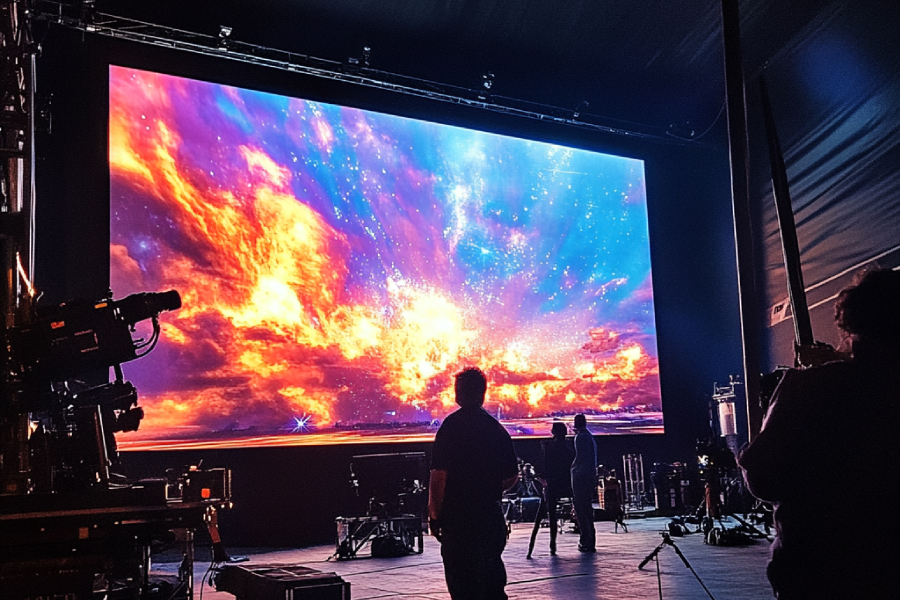
The simultaneous interpretation infrastructure can be planned according to need, including sound systems, video systems, LED screens, projectors, cameras, and congress equipment. This ensures all technical components of the event work together seamlessly.
Seamless Communication for Multilingual Events in Eskişehir
The Eskişehir simultaneous interpretation service is a professional communication infrastructure that allows participants from different languages to meet in the same event flow. While the speaker continues their presentation without interruption, participants can follow the content in their own languages in real-time.
For this system to work efficiently, interpreter support alone is not sufficient. Microphones, interpretation booths, language channels, receivers, headphones, technical rehearsal, and field support throughout the event must be planned together.
Thanks to a properly established simultaneous interpretation system, academic meetings, industrial events, international conferences, and corporate organizations become more fluent, understandable, and professional. Language differences cease to be a factor slowing down the flow of the event; A strong and uninterrupted communication bridge is formed between the participants.