Saray Cumhuriyet Mahallesi Şehit Ali Aktaş Caddesi 23/D Pursaklar/Ankara
  +90 312 496 51 91
  info@aktifkonferans.com.tr


Simultaneous Interpretation System Usage at Conferences
In international conferences, the accurate, rapid, and uninterrupted transmission of information is of paramount importance. To ensure that participants speaking different languages can follow the speaker's content simultaneously, it's not enough to simply employ professional interpreters. A fully established technical infrastructure is also necessary to accurately transmit the interpreter's voice to the participants. At this point, the use of simultaneous interpretation systems in conferences becomes one of the fundamental elements directly determining the quality of communication.
Simultaneous interpretation systems enable participants speaking different languages to follow the same session simultaneously at international conferences, scientific meetings, corporate summits, academic symposiums, and multinational company events. The speaker's voice is transmitted to the interpreter booth, the interpreter translates the speech into the target language in real time, and participants listen to their chosen language through headphones provided.
This process happens within seconds. Many participants may not realize how extensive the technical infrastructure working in the background is. However, a poorly planned system can lead to problems such as sound interruptions, interference, channel interference, and unintelligibility. Therefore, simultaneous interpretation systems should be considered in the early planning stages of a congress organization.
What is a Simultaneous Interpretation System?
A simultaneous interpretation system is a technical system that enables a speech to be translated into another language simultaneously and transmitted to the audience via wireless or wired equipment.
While the speaker is on stage or at the podium, the interpreter listens to the speech through headphones in a soundproof booth. Then, they translate into the target language via a microphone. The interpreter's voice is sent to the receivers used by the participants via the control unit and transmitter systems.
The participant listens to the translation by selecting the language channel on the receiver device. If more than one language is used in a congress, a separate channel can be created for each language. For example, in an event where Turkish, English, German, and French translation will be done, participants can follow the speeches by selecting the channel they need.
Thanks to this system, the speaker does not need to pause after every sentence. The translation is carried out simultaneously while the session continues in its natural flow. Thus, no time is lost and the program proceeds as planned.
Why is a Simultaneous Interpretation System Necessary in Congresses?
Conferences are organizations where intense information sharing takes place. The expressions used during academic presentations, industry evaluations, panel discussions, and question-and-answer sessions must be understood correctly. Language differences can slow down communication and negatively impact the participant experience.
In consecutive interpreting, the speaker pauses at certain intervals, and the interpreter translates the spoken part into another language. This method may be preferred in small meetings. However, in long programs like conferences, it can almost double the speaking time. In simultaneous interpreting, the speaker continues without interruption, and the translation is done simultaneously.
The prominent benefits of using simultaneous interpreting systems in conferences are:
It ensures that sessions proceed without time loss. It allows participants to follow the speeches in their own languages. It makes international participation more efficient. It maintains the speaker's presentation rhythm. It makes it possible to manage multiple language channels simultaneously. It strengthens the institutional and professional perception of the conference.
Simultaneous interpreting infrastructure is not only used in events with foreign speakers. Similar technologies can be used in hearing aid systems, press conferences, and parallel sessions held in different halls.
What Equipment Does a Simultaneous Interpretation System Consist Of?
The success of a simultaneous interpretation system depends on the harmonious operation of the equipment used. System components may vary depending on the size of the congress, the structure of the hall, the number of participants, and the number of languages to be used.
Interpreter Booths
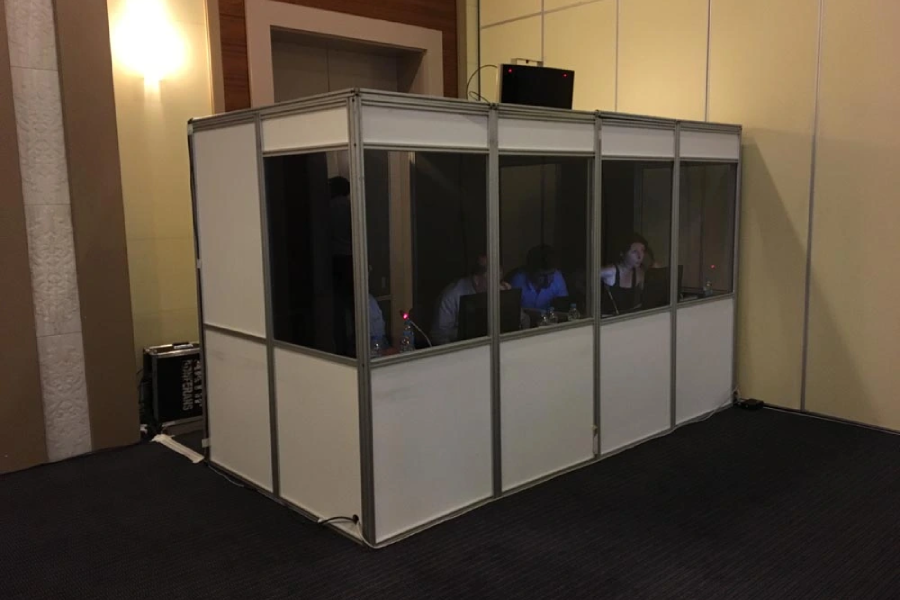
The interpreter booth is the soundproof area where the simultaneous interpreter works. The main purpose of the booth is to prevent the sounds inside the hall from disturbing the interpreter and to prevent the interpreter's voice from reaching the hall.
Professional booths should have adequate ventilation, viewing angles, and working space. It is important that interpreters can easily see the speaker, the stage, and the presentation screen. In situations where visibility is limited, a video monitor can be placed inside the booth.
Interpreter Console
The interpreter console is the control device that the interpreter uses to manage the microphone and audio channels. Through this device, the interpreter can adjust the speaker's volume, turn the microphone on and off, and listen to different language channels when necessary.
In long congress programs, interpreters work in shifts. The console design should facilitate interpreter transitions and avoid audio interruptions.
Microphone and Conference Systems
In a congress, the voices of speakers, moderators, and participants must reach the interpreter booth clearly. Therefore, the microphone system used is a crucial part of the simultaneous interpretation infrastructure.
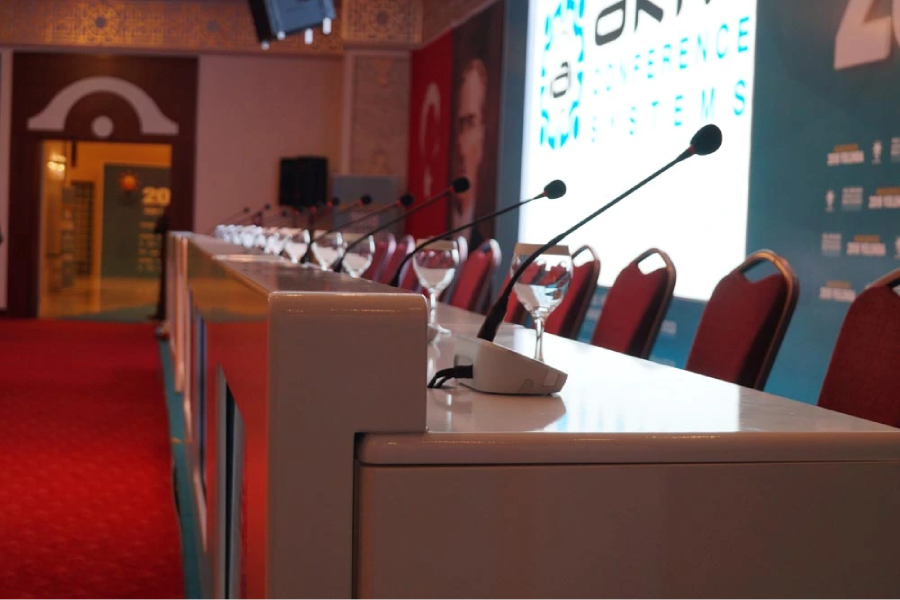
Podium microphones, lapel microphones, handheld microphones, and delegate microphones can be used depending on the organization's structure. Desktop conference microphones are preferred for panel sessions, while wireless microphones can be used for stage presentations.
Transmitter Systems
The interpreter's voice is sent to the participants' receiver devices via a transmitter. Infrared or radio frequency systems are commonly used in congresses.
Infrared systems can provide an advantage in meetings requiring privacy because they can limit the signal within the hall. Radio frequency systems, on the other hand, can offer a wide coverage area in different venue conditions. Which technology will be used should be determined according to the structure of the hall and the organization's needs.
Receivers and Headphones
Portable receivers provided to participants allow them to select the translation channels. Participants select the desired language via the device and listen to the translation through headphones.
Receivers should be charged, channel settings should be configured, and headphones should be prepared hygienically before the congress. Having a sufficient number of backup devices is also important for ensuring uninterrupted operation.
Central Control and Sound Management
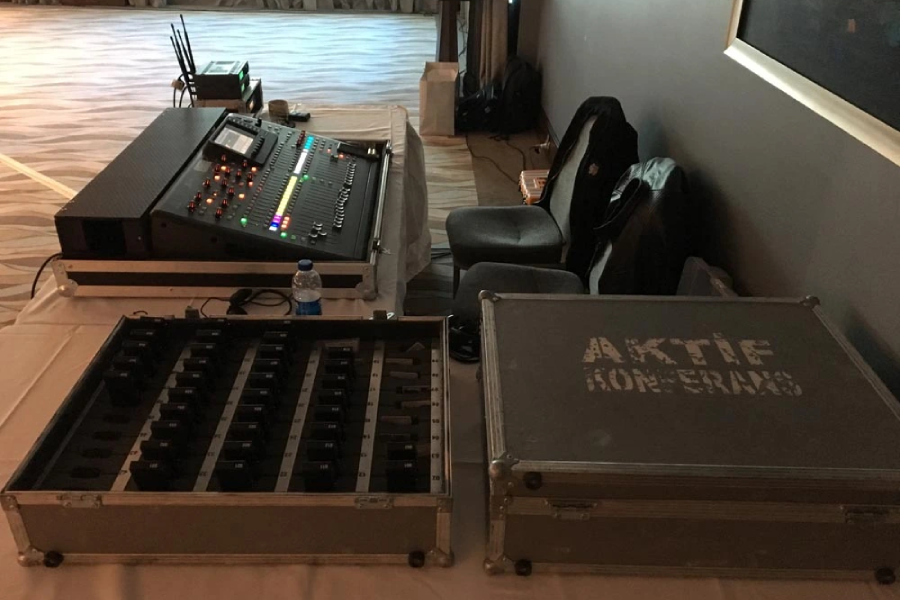
All sound sources of the simultaneous interpretation system are managed through a central control point. Sound from the speaker microphones must be transmitted to the interpreter consoles and the hall sound system at the correct level.
The technical team constantly monitors microphone levels, interpretation channels, hall sound, and recording outputs. Therefore, not only is the equipment set up, but professional technical support must also be provided throughout the event.
How to Do Technical Planning Before the Congress?
Simultaneous interpretation system setup is not a process that begins with bringing equipment to the hall on the day of the event. For a healthy system, the venue and organization must be analyzed in advance.
In the first stage, the number of participants, the number of languages to be used, the number of halls, and the session program are determined. If sessions will be held in more than one hall simultaneously, separate channel and equipment planning can be done for each hall.
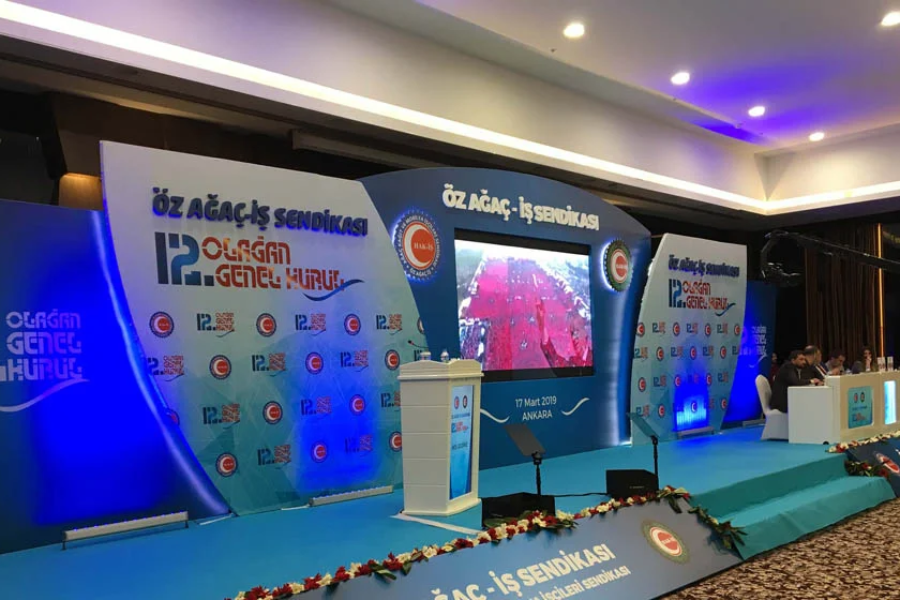
During the hall survey, the area where the interpreter booths will be placed, transmitter coverage points, technical desk location, electrical connections, and cable routes are examined. The booths should be placed in a location where they can see the speaker but will not obstruct participant movement.
The congress program should also be shared with the technical team. It's essential to know in advance which languages will be used in each session, where speakers will take the stage, and which microphones will be used during the Q&A session.
During planning, it's helpful to answer the following questions:
- How many different languages will be used at the congress?
- How many participants will utilize translation services?
- Will the event be held in a single hall or in parallel halls?
- Is there suitable space for interpreter booths?
- Will audio from presentations and video content be transmitted to the interpreters?
- Will sessions be recorded or live-streamed? If questions are to be taken from participants, how will the microphone system be set up?
Based on this information, the number of equipment and the technical team plan can be more accurately determined.
How Does Sound Quality Affect Translation Performance?
For a simultaneous interpreter to translate accurately, they need to hear the speech clearly. Incorrect microphone usage by the speaker, low sound levels, or echoes in the hall can directly affect the quality of the translation.
Ensuring that the speaker's voice reaches the interpreter console clearly is a fundamental requirement of the technical infrastructure. For this reason, microphone selection and sound settings should be adjusted according to the hall conditions.
If a video is to be shown during the presentation, the video's audio should also be transmitted to the interpreter booth. Otherwise, the interpreter will not be able to hear the content, and there may be interruptions in the translation. Similarly, the audio of speakers connecting online should be correctly routed to the simultaneous interpretation system.
Sound control should not be limited to a short test before the event begins. The technical team should monitor the levels from different microphones throughout the session and make necessary adjustments in real-time.
Simultaneous Interpretation in Hybrid Conferences
In hybrid conferences, where physical and online participation coexist, the simultaneous interpretation infrastructure is planned more comprehensively. While the voices of speakers in the hall are transmitted to online participants, the voices of speakers connecting remotely must also be transmitted to the hall and interpreter booths.
In hybrid conferences, sound routing must be carefully done to prevent different sound sources from interfering with each other. Separate language channels can be created for online participants. The translation done by the interpreters in the hall can be transferred to the broadcast platform, and participants can listen to their preferred language digitally.
Since internet connection, broadcast infrastructure, sound cards, conference software, and the simultaneous interpretation system must work together, the rehearsal process is particularly important in hybrid organizations.
Applications that Enhance Participant Experience
The technical operation of the simultaneous interpretation system alone is not sufficient. Participants must also be able to use the system easily.
A well-organized table can be set up in the recording area for the distribution of receivers. Channel selection and sound settings should be briefly explained to participants during device distribution. The channel for each language should be clearly indicated at the entrance to the hall.
The headphone and receiver handover process should be planned in a way that does not increase participant density. In large conferences, numbering the devices and keeping records of handovers facilitates the complete collection of equipment at the end of the event.
Having a technical staff member present in the hall to address any problems participants may encounter is beneficial. Simple issues such as a malfunctioning headphone, a dead receiver battery, or incorrect channel selection can be resolved quickly.
What to Consider When Renting a Simultaneous Interpretation System?
When choosing a simultaneous interpretation system rental service, technical suitability should be evaluated in addition to the price. A professional service should include not only the handover of equipment but also site survey, planning, installation, testing, and technical support throughout the event.
Before renting, it should be determined whether the equipment is suitable for the conference capacity. Preparing fewer receivers than the number of participants or insufficient language channel capacity can cause serious problems during the organization.
The sound insulation of the interpreter booths, the sound quality of the headphones, the battery life of the receivers, and the transmitter coverage area should be checked. Compatibility of the system components and the availability of backup equipment are also important.
The following factors should be considered when choosing a professional translation service:
- Pre-event venue survey
- System planning based on the language to be used and the number of participants
- Setting up professional interpreter booths
- Preparing a sufficient number of receivers, headphones, and backup devices
- Availability of technical personnel throughout the congress
- Integration with sound, video, and broadcast systems
- Comprehensive rehearsal and testing before the event
The Right Simultaneous Translation Infrastructure for Flawless Congress Communication
The use of simultaneous translation systems at congresses is a professional solution that enables communication between participants speaking different languages. With the right equipment selection, experienced interpreters, and technical support provided throughout the event, speeches can be simultaneously translated into different languages.
When planning the simultaneous translation infrastructure, the venue structure, the number of participants, the language channels to be used, and the program flow should be evaluated together. The sound system, video infrastructure, microphones, and translation equipment must work together as a whole.
The professional simultaneous translation system solutions offered by Aktif Konferans can be planned according to the needs of different organizations, from international congresses and academic meetings to corporate summits and hybrid events. Thanks to professional technical infrastructure, participants can follow the presentations seamlessly in their own languages, while the event program maintains its natural flow.