Saray Cumhuriyet Mahallesi Şehit Ali Aktaş Caddesi 23/D Pursaklar/Ankara
  +90 312 496 51 91
  info@aktifkonferans.com.tr


Simultaneous Interpreting in Izmir
At an international congress held in Izmir, speakers from different countries may give presentations in English, Turkish, or other languages on the same day. While some participants may understand the speeches directly, others may need translation assistance. In such an event, the speaker having to pause every few sentences and wait for the translation to be completed can prolong the program and disrupt the flow of the presentation.
Izmir simultaneous interpretation service solves this communication problem without interrupting the flow of the speech. While the speaker continues their presentation at their natural pace, the interpreter translates the speech into the target language with a delay of a few seconds. Participants follow the event by selecting the appropriate language channel via the receiver devices and headphones provided.
This system is not solely based on the interpreter's translation. Speaker microphones, translation booths, interpreter consoles, transmitter systems, language channels, receiver devices, and technical control infrastructure must work together. A problem at any point in the system can cause participants to listen to the translation intermittently or unintelligibly.
Congresses, conferences, fairs, health meetings, tourism organizations, corporate gatherings, and international panels held in Izmir create different simultaneous interpretation needs. Therefore, the system used should be prepared according to the number of languages spoken, the hall structure, the participant capacity, and the program flow of the event.
What Needs Does Simultaneous Interpretation Address in Izmir?
In events with international participation, the main problem is not just the different languages spoken. The real need is for all participants in the same hall to have access to the same content simultaneously.
If only a specific language group can understand a speaker's presentation, it can cause other participants to lose focus. Communication becomes even more difficult if the presentation slides are prepared in a foreign language or if different languages are used in question-and-answer sessions.
Thanks to the simultaneous interpretation system, the speaker's presentation is not interrupted. While participants listen to the translation in their own language, others in the hall can follow the original speech or another language channel. The ability to use multiple languages simultaneously provides a significant advantage, especially in congresses and conferences with large participation.
This method also helps to use the event time more efficiently. While consecutive interpretation requires the speaker to pause at specific intervals, simultaneous interpretation allows the speech and translation to proceed simultaneously. This ensures a smoother program.
How Does Simultaneous Interpretation Work at an Izmir Congress?
To understand how simultaneous interpretation works within an event, it's necessary to look at the audio flow from the speaker to the participant.
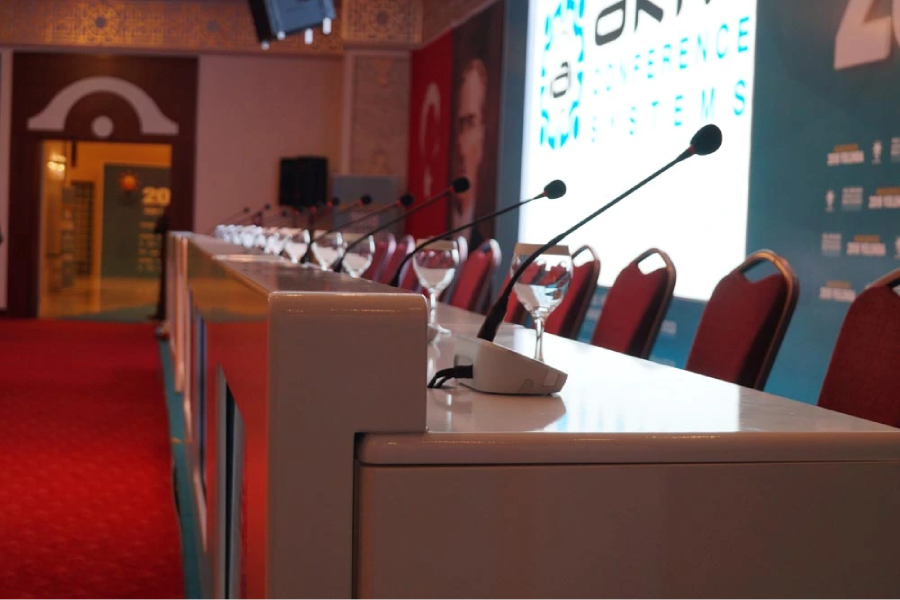
The speaker speaks through a podium microphone, lapel microphone, or wireless handheld microphone. This sound is transmitted to the hall's main sound system and simultaneously to the interpretation booth. The interpreter listens to the speaker through headphones and translates into the target language.
The interpreter's voice is sent to a separate language channel. The participant selects the channel for their language on the receiving device and listens to the translation through headphones. This process continues without interrupting the speaker's presentation.
The basic flow of the system is as follows:
Speaker microphone → Main sound system → Translation booth → Interpreter console → Language channel → Transmitter system → Participant receiver → Headphones
For this chain to function properly, all connections must be tested before the event. The sound from the speaker's microphone must reach the interpreter clearly, the language channels must be correctly routed, and the receiver devices must work seamlessly throughout the hall.
Simultaneous Translation Use in Trade Fairs and Commercial Events
In trade fairs and commercial events held in Izmir, foreign visitors, manufacturers, distributors, and company representatives may meet in the same environment. One-on-one translation may suffice for booth meetings; however, simultaneous translation becomes more functional in presentations with large participation, product launches, and industry panels.
If a brand is introducing a new product to international visitors, the speaker's presentation can be delivered to different language groups simultaneously. Participants can follow the presentation in their own languages without interruption.
Since ambient noise can be high in trade fair environments, the quality of the sound system and headphones is important. The speaker's voice must reach the translation booth clearly, and participant receivers must be able to use the booth without being affected by external noise.
Furthermore, device distribution points, participant guidance, and language channel information should be clearly planned. In organizations with high visitor traffic, disorganized device distribution can cause delays at the start of the program.
Terminology Management in Health and Scientific Meetings
Simultaneous interpretation in meetings held in fields such as medicine, engineering, law, energy, and finance cannot be carried out solely with language skills. The terminology, technical concepts, and abbreviations used directly affect the quality of the translation.
For example, at an international health congress held in Izmir, speakers may present using disease names, treatment methods, drug ingredients, or scientific research data. The interpreter needs to be prepared for these concepts.
Therefore, it is important to share presentation files, speaker information, and the program flow with interpreters before the event. Interpreters use these materials not to memorize the speech text, but to prepare for the terminology and understand the context of the subject.
The technical team must also ensure that the video, presentations, and speaker audio reach the booth completely. If a video in a foreign language is to be played during the presentation, the audio of the video should also be sent to the interpreter. Otherwise, participants may have to listen to the content in the video section without translation.
Tourism and International Corporate Meetings
Meetings with participants from different countries can be organized in Izmir within the scope of tourism, hospitality, investment, and international collaborations. Even though these events are smaller than classic congresses, communication sensitivity can be quite high.
In management meetings, investor presentations, dealer meetings, and in-house trainings, accurate understanding of what is being said is crucial. Incorrectly conveying business decisions, technical details, or project specifications can negatively impact the outcome of the meeting.
In such organizations, portable simultaneous interpretation systems or booth solutions suitable for the hall structure can be considered. The number of participants, table arrangement, and the need for confidentiality of the meeting may change the system choice.
Even in smaller meetings, the translation audio needs to be clear, channel switching needs to be smooth, and the equipment needs to be comfortable. Professionalism is important not only in large congresses but also in high-level meetings with limited participation.
Where Should the Translation Booth Be Placed?
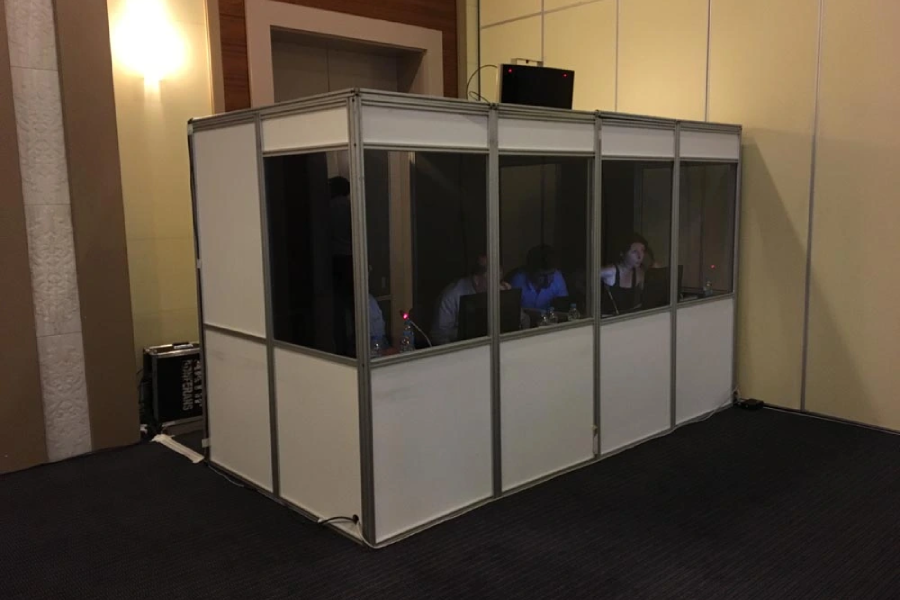
The translation booth is one of the most important parts of a simultaneous interpretation system. The booth allows interpreters to work without being disturbed by the noise of the hall and prevents their translation from being broadcast to the surroundings.
Simply having empty space is not enough for the booth placement. Interpreters need to be able to see the stage, the speaker, and the presentation screen. The speaker's gestures, slide changes, and developments in the hall help in understanding the context of the translation.
If the interpreter booth is to be set up outside the hall or in an area with limited visibility, interpreters should be provided with camera and monitor support. This support should clearly show the speaker, presentation screen, and stage flow.
The booth placement should also not obstruct participant passage, block emergency exits, or allow for secure technical cable connections.
How to Plan Participant Receivers?
In events where simultaneous interpretation will be used, the number of devices should not be determined solely by the total number of participants. The language groups that will require interpretation should be anticipated in advance.
For example, in a congress with 500 participants, not all participants may use interpreter devices. However, bringing only the number of devices corresponding to the confirmed registrations is also risky. A certain number of spare devices should be kept for last-minute participation, battery problems, or technical malfunctions.
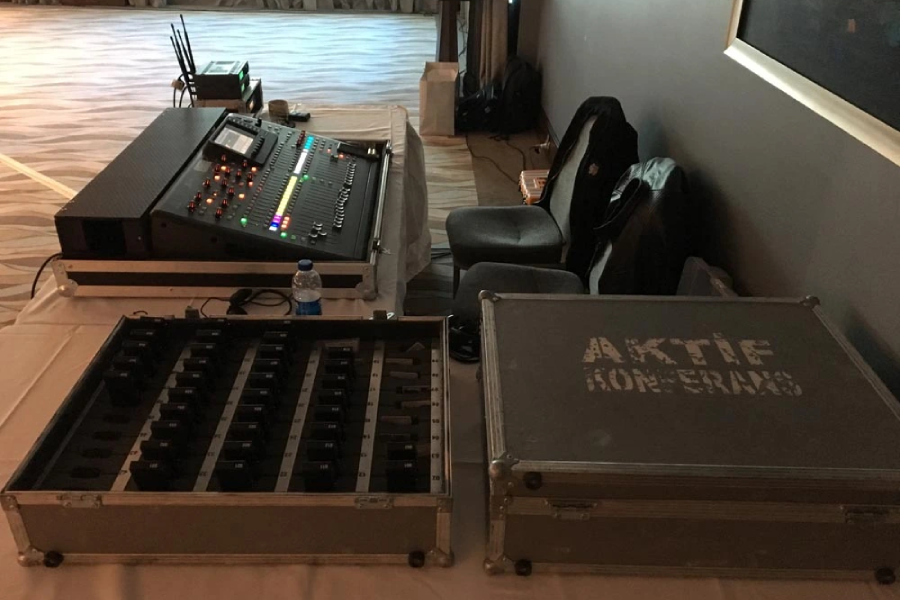
Charging and battery checks of the devices should be completed before the event. Channel selection and headphone output of each receiver should be tested. When distributing devices to participants, it should be explained which channel belongs to which language.
The distribution and collection process is also part of the organizational plan. Positioning equipment desks closer to the hall entrance, keeping records of handovers, and creating separate collection points at the end of the event can reduce congestion.
Points to Consider During Panel and Q&A Sessions
Simultaneous translation systems may face the most challenges during Q&A and panel sessions. This is because speakers change rapidly, questions come from the audience, and sometimes more than one person speaks at the same time.
All panelists must use microphones. Interpretations made without microphones or loud questions from the audience may not reach the interpreter clearly. In this case, participants may hear silence in the translation channel or only follow a portion of the conversation.
Wireless handheld microphones should be distributed to participants by staff during Q&A sessions. The person asking the question should be allowed to use their microphone; the moderator should not repeat conversations without microphones.
Also, if a question is asked in a different language, language guidance should be planned in advance so that both the speakers on stage and other participants can understand the question.
Channel Structure in Multilingual Events
Simultaneous interpretation services in Izmir can be used in bilingual organizations, as well as in events with three or more languages. A separate channel and appropriate interpreter arrangement are required for each target language.
For example, if the main speech is in English and the target languages are Turkish, German, and Arabic, a separate channel can be created for each translation. Participants select the relevant channel via their own devices.
In multilingual systems, all teams must use the same plan to avoid channel number confusion. Registrar staff, technical team, interpreters, and hall managers must know which language is on which channel.
If the language direction changes in the event program, planning becomes more comprehensive. Some sessions may involve translation from Turkish to English, and others from English to Turkish. These transitions must be known in advance by interpreters and the technical team.
What Should a Pre-Event Technical Rehearsal Include? During a technical rehearsal, simply turning on the system is not enough. The entire sound chain, from the speaker's microphone to the participants' headphones, must be tested.
Each microphone should be checked individually, and it should be confirmed that the sound reaches the translation booth. Interpreter consoles, microphones, and headphones should be tested. It should be checked that the language channels are routed to the correct outputs.
The signal level should be measured by moving around different points in the hall with the receiver devices. In halls with columns, balconies, or partitions, some areas may have weak coverage.
Presentation videos, panel microphones, and question-and-answer sessions should also be rehearsed. It should be confirmed that the interpreters can see the stage and the presentation, and any program changes should be shared with the technical team.
This work reduces problems such as channel confusion, low volume, signal interruptions, or misdirection that may occur during the event.
What to Consider When Obtaining Simultaneous Interpretation Services in Izmir?
Simultaneous interpretation services should not be evaluated solely on the number of receiver devices provided. The technical and operational details of the offer should be clear.
It should be checked whether the translation booth, console, microphone, transmitter, receiver device, headphones, technical personnel, installation and dismantling services are included in the offer. If there is more than one hall, the needs of each hall should be specified separately.
It is also important that the service provider can integrate with the main sound system. The translation system's independent operation is insufficient; all speaker, panelist, video, and participant audio must reach the booth.
Having technical personnel on-site throughout the event allows for quick intervention in case of equipment malfunctions and channel problems. Models where only the setup is completed and the technical team leaves the area can pose risks in long and complex programs.
Professional Simultaneous Translation Infrastructure in Izmir with Aktif Conference
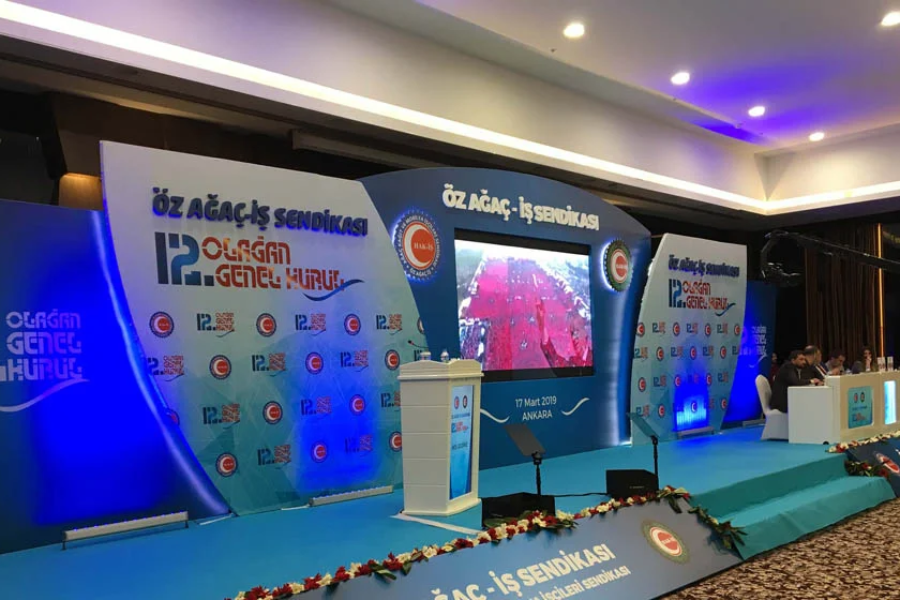
Aktif Conference offers simultaneous translation system solutions for international congresses, conferences, panels, fairs, and corporate meetings held in Izmir.
Translation booths, interpreter consoles, transmitter systems, receiver devices, and headphones are planned by evaluating the number of languages, participant capacity, hall structure, and program flow of the event. Necessary connections are established with the main sound system to ensure that the speaker's voice reaches the interpreters clearly.
After installation, language channels, microphones, and hall coverage are tested. Throughout the event, the technical team monitors the system, supports equipment distribution, and intervenes in any technical problems that may arise.
Simultaneous translation infrastructure can be customized according to needs; The sound system, LED screen, projector, camera, and congress equipment can be planned together. Thus, different technical systems work not independently, but within the same organizational flow.
Seamless Communication for Multilingual Events in Izmir
The success of an international event is not measured solely by the inclusion of foreign speakers in the program. These speeches must be understood correctly, comfortably, and seamlessly by the participants.
Simultaneous translation services in Izmir bring together participants from different languages within the same event flow. While the speaker continues their presentation at their natural pace, participants can follow the presentation through their own language channels.
To create this experience, in addition to interpreters, the right microphone infrastructure, appropriate booth placement, reliable language channels, sufficient receiving equipment, and professional technical control are required. When the entire system works harmoniously, language differences cease to be a problem that slows down the event and become a strong structure supporting international communication.