Saray Cumhuriyet Mahallesi Şehit Ali Aktaş Caddesi 23/D Pursaklar/Ankara
  +90 312 496 51 91
  info@aktifkonferans.com.tr


How to Choose the Right Sound System for Your Event
One of the technical problems that attendees notice most quickly at an event is sound. The visual design may be strong, the stage decor impressive, and the program flow well-planned; however, if the speaker's voice is unclear, the music is too loud, or there's echo in the hall, the professional perception of the event is directly weakened. Therefore, choosing the right sound system for events is one of the most important technical stages of event planning.
Choosing the right sound system doesn't just mean using powerful speakers. The type of event, the structure of the venue, the number of attendees, the speaker arrangement, the microphones to be used, the music requirements, the stage location, and the technical team support must all be considered together. The sound system used in a small seminar room cannot be the same as the system used in an outdoor concert. Similarly, a panel discussion, a dealer meeting, a gala night, or a product launch requires different sound solutions.
The main goal in professional sound system planning is not just to amplify the sound, but to deliver it to attendees in an understandable, balanced, and controlled manner. Aktif Konferans contributes to the higher quality of events by offering sound system solutions tailored to the venue and organizational flow for various event types, from corporate meetings and conferences to launches and gala nights.
How Does Choosing the Wrong Sound System Affect an Event?
Mistakes in sound system selection are immediately noticeable during the event. Attendees are distracted if they have difficulty understanding the speaker. Frequent microphone cutouts disrupt the flow of the event. If speakers are incorrectly positioned, the sound will be too loud in some areas and insufficient in others. This can seriously affect the professional perception, especially in corporate events.
The most common consequences of choosing the wrong sound system are:
- Locked speech
- Echo or humming in the hall
- Crackling, interruptions, or popping sounds from the microphones
- Uneven progression of music and speech sounds
- Insufficient sound in the back rows
- Uncomfortably loud sound in the front rows
These problems can often be prevented during the planning phase, not on the day of the event. Many technical problems that might occur during the event can be eliminated if the right equipment is selected, venue analysis is conducted, and sound testing is performed before the event.
First Criterion: The Type of Event
The first point to consider when choosing a sound system is the type of event. Because not every event has the same sound needs. While clarity of speech is paramount at a conference, at a gala night, the speech, music, and stage transitions must be managed together. At a product launch, the video audio, presentation audio, and speaker microphone must work together seamlessly within the same system.
At Conferences and Seminars
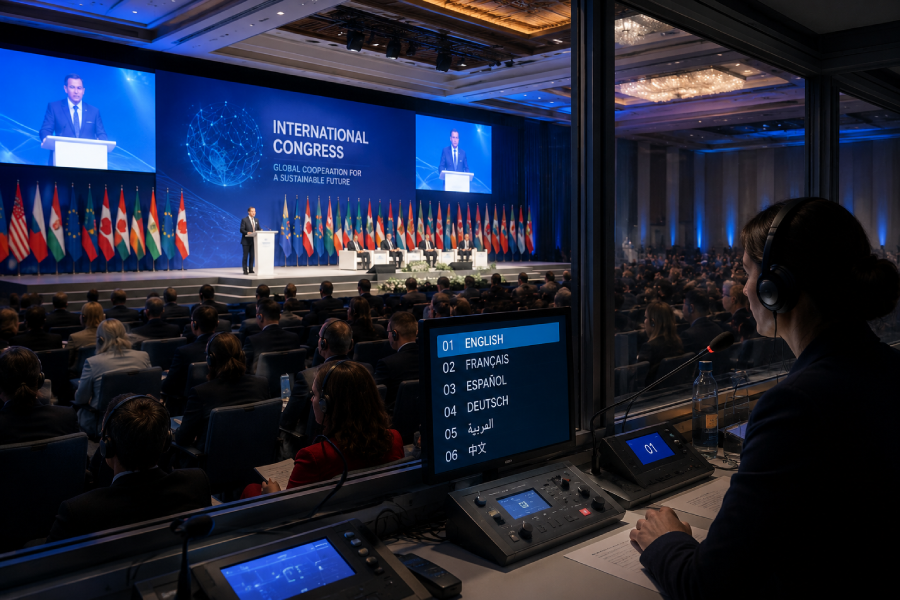
The primary need at conferences, seminars, and panel events is for the speech to be clearly audible. Lapel microphones, podium microphones, desktop microphones, or wireless handheld microphones can be used at these events. The speaker system should be planned to transmit speech frequencies clearly. Clarity of sound is more important than excessive volume.
At Product Launches and Corporate Meetings
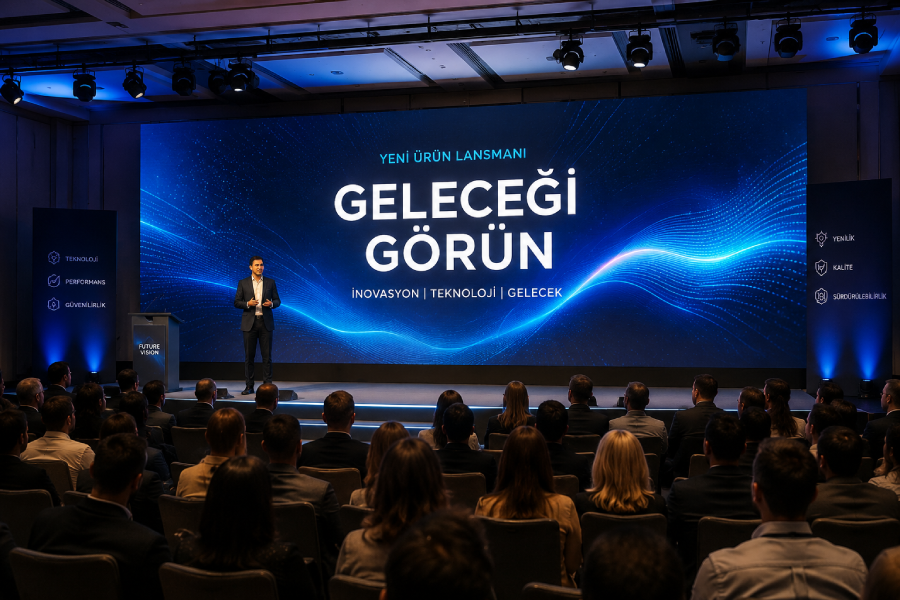
The sound system should be considered more comprehensively at product launches, dealer meetings, and corporate presentations. Speaker microphones, video audio, music inputs, and stage announcements can all be used within the same flow. Therefore, mixer control, audio transitions, and technical team management become crucial.
At Galas, Award Ceremonies, and Special Events
At galas and award ceremonies, the speech, music, and stage atmosphere progress together. The presenter microphone, award announcements, background music, and stage transitions must be managed in a balanced manner. In such events, technical operations play a crucial role as much as the sound system.
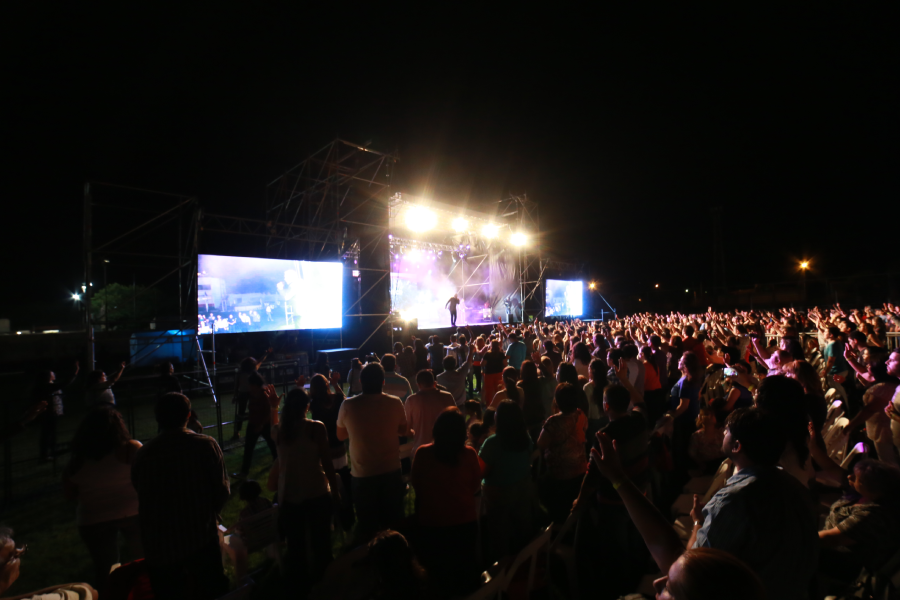
In outdoor events, sound system selection should be done more carefully. Sound does not reflect off walls as it does indoors; it spreads over a wide area. Wind, ambient noise, and participant density must be taken into account. Therefore, more powerful speaker systems and proper positioning are required.
Space Acoustics Determines Sound Quality
One of the most critical aspects of choosing the right sound system is the acoustics of the space. The same equipment can produce different results in different venues. A ballroom with high ceilings, a meeting area with many glass surfaces, an outdoor stage, or a narrow conference hall cannot be managed with the same sound plan.
In enclosed spaces, echo, sound reflection, and humming are significant problems. Sound reflects more in spaces with hard surfaces, and speech can become unintelligible. In spaces with carpets, curtains, and acoustic surfaces, sound can travel more controllably. Therefore, the angle, height, and position of the speakers should be determined according to the space.
In open spaces, sound dispersion is the main problem. As the audience area expands, homogeneous sound distribution becomes more difficult. In this case, simply using more powerful speakers is not enough. The direction in which the sound will be directed, whether supporting speakers are needed, and the noise conditions around the stage must be evaluated.
A professional technical team analyzes the space before installation and plans the sound system according to this acoustic structure. Equipment selected without this analysis may not deliver the expected performance.
Number of Participants and Venue Size
When choosing a sound system, the number of participants must be taken into account. There is a big difference between a system used for a meeting of 50 people and one used for an outdoor event with 1000 people. However, not only the number of people but also how the participants will be seated in the venue is important.
For example, if an event with 300 people is held in a long and narrow hall, the sound distribution will be planned differently. The speaker placement may change when the same number of people is in a wide and short hall. Different arrangements such as theater style, round table arrangement, classroom arrangement, or standing participants affect the sound plan.
As the number of participants increases, the need for speaker power, distribution points, and technical control also increases. In large organizations, placing speakers only in front of the stage may not be sufficient. Support sound systems may need to be installed in the back sections. This ensures that the sound reaches the entire area more evenly.
Microphone Selection Should Be Made According to the Event Flow
Microphone selection is an important detail that directly affects the quality of the sound system. Choosing the wrong microphone can lead to the speaker being unable to move comfortably, the sound being low, or excessive ambient noise being picked up.
Lapel microphones are suitable for speakers giving presentations because they provide freedom of movement. Podium microphones are preferred for more formal speeches. Wireless handheld microphones are a practical solution for presenters, moderators, or Q&A sessions. Tabletop microphones provide a more organized use in panel events.
The number of microphones should also be planned correctly. If there are five speakers on the panel, using only two microphones will slow down the flow. If there will be a Q&A session, participant microphones should be considered separately. The needs of the presenter, speaker, moderator, panelist, and participants should be evaluated individually.
Speaker Placement is Just as Important as Equipment Quality
Using quality speakers is important; however, incorrect speaker placement can reduce sound quality. Speakers need to be positioned correctly according to the stage, participant area, and venue structure.
Speakers are used not only to produce loud sound but also to distribute sound evenly. If there is disturbing sound in the front rows while the sound is insufficient in the back rows, it means the system has not been planned correctly. This situation is especially common in large halls.
In a professional setup, the angle, height, direction, and number of speakers are carefully determined. Additional support speakers are used if necessary. Thus, participants achieve similar sound quality at different points in the venue.
Mixer, Amplifier, and Control Systems
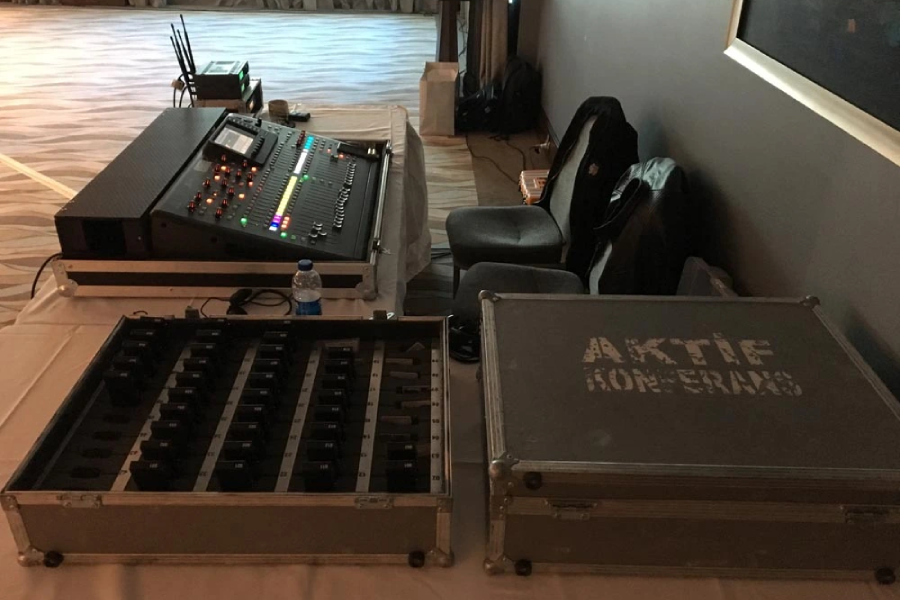
Behind the sound system are mixers, amplifiers, and control equipment. These components are often invisible to participants; however, they are key elements determining sound quality.
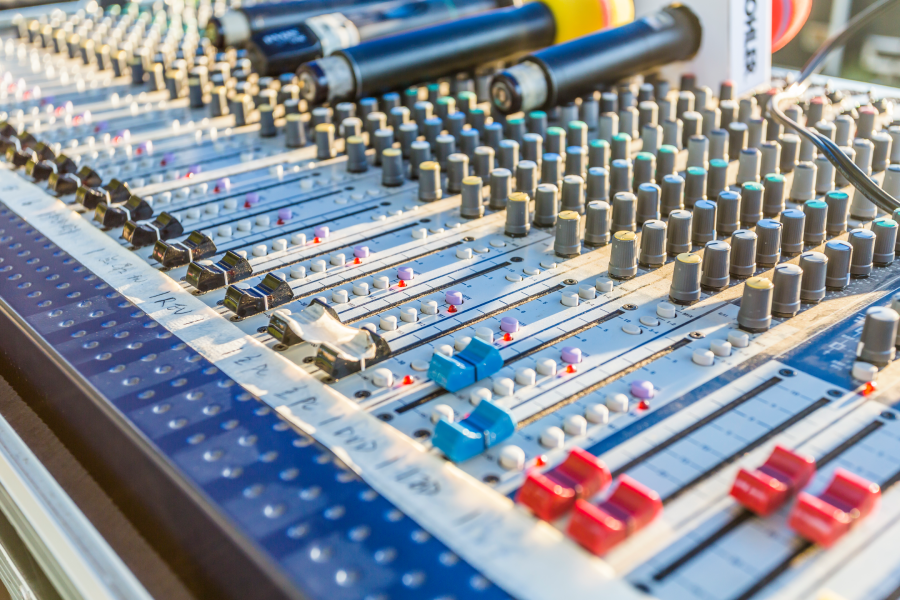
The mixer manages microphones, computer audio, video audio, music sources, and other audio inputs. The technical team balances sound levels, controls transitions, and makes necessary adjustments via the mixer. Amplifiers, on the other hand, strengthen the audio signal and transmit it to the speakers.
These systems must be selected with the correct capacity. Using insufficient amplifiers or uncontrolled mixers can lead to sound distortions and unbalanced outputs. In professional events, the sound control system must be managed by experienced technicians.
Pre-Event Sound Testing is Essential
Even if the right sound system is chosen, a pre-event test cannot guarantee its successful operation. Sound testing ensures that all microphones, speakers, music sources, and video audio are checked before the event begins.
During sound testing, speaker microphones are tested, speaker levels are adjusted, echo control is performed, and scene transitions are tested. If video is to be played via LED screen or projector, the video audio must also be integrated into the sound system in the hall.
This rehearsal allows for the identification of potential technical problems during the event. Issues such as microphone popping, low volume, connection problems, or audio-video mismatch can be resolved during the testing phase.
Why is Choosing the Right Company Important?
Sound system selection should not be based solely on the equipment list. The technical experience of the company providing the service, their installation approach, and their ability to provide support throughout the event are also important. Because in professional organizations, the technical team is just as crucial as the equipment.
A good technical team conducts a needs analysis before the event, selects the appropriate equipment, performs the installation, completes the sound test, and monitors the system throughout the event. They respond quickly to potential problems. This approach ensures the seamless progress of the organization.
Active Conference professionally supports the technical infrastructure of organizations by planning sound system solutions suitable for the event type and venue structure. With microphones, speakers, amplifiers, sound control systems, pre-installation testing, and technical team support throughout the event, it contributes to the balanced and reliable progress of sound quality.
Proper Planning for a Powerful Sound Experience at Events
Choosing the right sound system for events is not just a technical decision, but a crucial organizational element that determines the participant experience. Clear, balanced, and uninterrupted sound enhances the intelligibility of speeches, the accurate transmission of music, and the professional perception of the event.
In successful sound system planning, the event type, venue acoustics, number of participants, microphone needs, speaker placement, and technical team support should be considered together. Since every organization has different needs, a custom plan should be made instead of a standard sound system solution.
Sound systems prepared with the right equipment, professional installation, and experienced technical support ensure that events proceed in a more understandable, organized, and impactful manner.