Saray Cumhuriyet Mahallesi Şehit Ali Aktaş Caddesi 23/D Pursaklar/Ankara
  +90 312 496 51 91
  info@aktifkonferans.com.tr


Simultaneous Interpreting for International Meetings
International meetings are significant events where participants, institutional representatives, experts, and managers from different countries come together in the same environment. In such meetings, information sharing, decision-making processes, collaborations, and formal discussions are often conducted in multiple languages. To ensure participants understand the speeches correctly and actively participate in the meeting flow, a professional translation infrastructure is necessary. In this regard, simultaneous interpretation for international meetings is one of the most effective solutions for ensuring uninterrupted and efficient communication.
Simultaneous interpretation involves translating the speaker's words into another language simultaneously and transmitting them to participants via headphones. This method eliminates the need for the speaker to wait for the interpreter to translate. The meeting continues naturally, allowing participants to follow the speeches in their own language in real time. Simultaneous interpretation systems are particularly important for formal meetings, multinational company meetings, diplomatic gatherings, international training programs, and industry summits.
Aktif Konferans professionally supports the communication infrastructure of organizations with simultaneous interpretation systems, translation booths, receiving devices, headphones, microphone systems, and technical support services needed for international meetings.
Why is Simultaneous Interpretation Necessary at International Meetings?
The primary goal of international meetings is to establish accurate and effective communication among participants from different countries. However, the main language used in the meeting may not be known at the same level by all participants. This can lead to misunderstandings of the topics discussed, reduce the effectiveness of the meeting, or prevent participants from fully engaging in the process.
Simultaneous interpretation eliminates this problem. Participants can focus more easily on the meeting because they can listen to the speeches in their own language. Accurate understanding is crucial, especially in meetings dealing with technical, legal, commercial, or academic topics. A misunderstood statement can directly affect the purpose of the meeting and the decisions made.
Therefore, simultaneous interpretation at international meetings should not be seen merely as an auxiliary service. It should be considered one of the fundamental communication infrastructures that ensures the professional progress of the meeting.
How Does a Simultaneous Interpretation System Work?
A simultaneous interpretation system works on the principle of transmitting the speaker's voice to the interpreter, the interpreter providing real-time translation, and this translation being conveyed to the participants. This process happens in seconds, and the meeting flow is not interrupted.
During the meeting, the speaker speaks through a microphone. This sound is transmitted to the translation booth via the technical system. The interpreter listens to the speech through headphones and simultaneously translates it into the target language. The translation is transmitted to the system via the interpreter's microphone and sent to the participants' receiving devices via transmitter systems.
Participants follow the speech in their own language by selecting the relevant language channel through their provided headphones and receiving devices. If more than one language is used in the meeting, a separate channel can be created for each language. Thus, the same speech can be translated into different languages simultaneously.
For this system to function properly, sound quality, signal transmission, channel management, and technical control processes must be professionally planned.
Simultaneous Interpretation Equipment Used in International Meetings
A professional simultaneous interpretation system consists of the harmonious operation of many different pieces of equipment. Each piece of equipment plays an important role in ensuring uninterrupted communication throughout the meeting.
Translation Booth
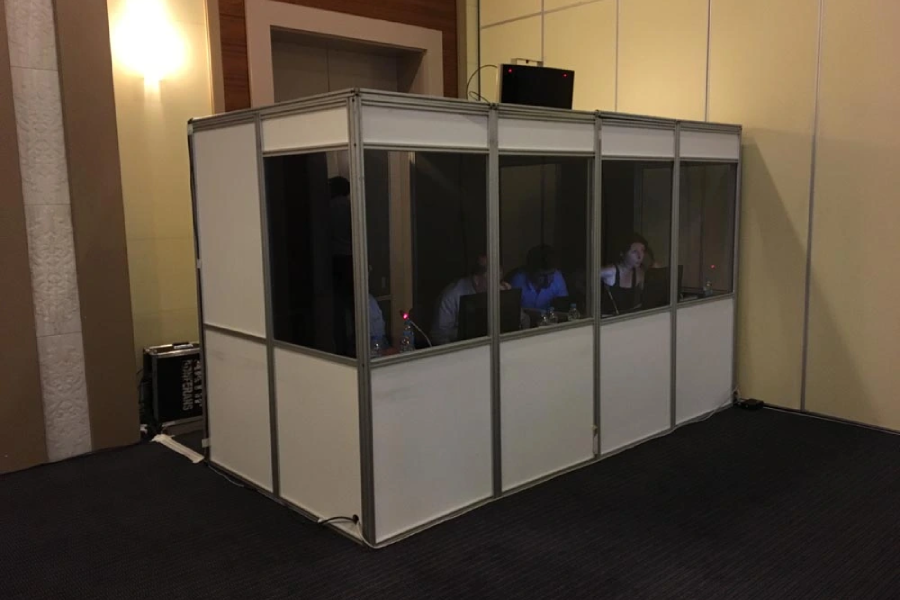
The translation booth is the special area where interpreters listen to the speech and translate. Thanks to its soundproof structure, the interpreter can work without being affected by external noises. In international meetings, having the interpreter in a position where they can see the stage, speakers, or panel table improves the quality of the translation.
Interpreter Microphone and Headset
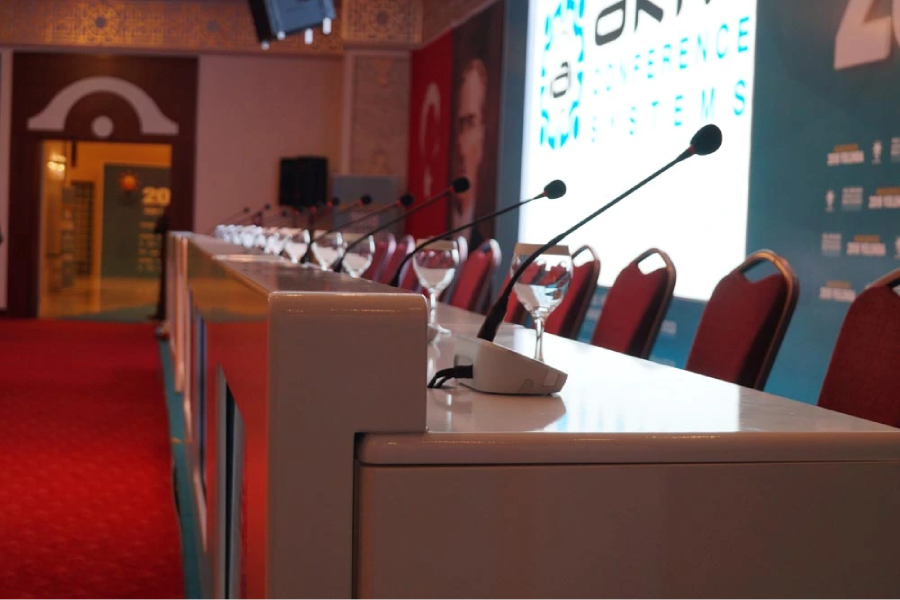
The interpreter listens to the speaker's voice through headphones and transmits the translation to the system via the microphone. The quality of this equipment is crucial for clear sound transmission. Poor sound quality can make it difficult for the interpreter to follow the speech correctly.
Receiver Devices
These are portable devices used by participants to listen to the translation. Each participant is given a receiver device before the meeting. The language channel can be selected via the device, and the participant can listen to the meeting in their own language.
Headphones
Headphones ensure that the translated audio reaches the participants clearly and comfortably. Especially in long meetings, the quality of the headphones directly affects the participant experience.
Transmitter and Control Systems
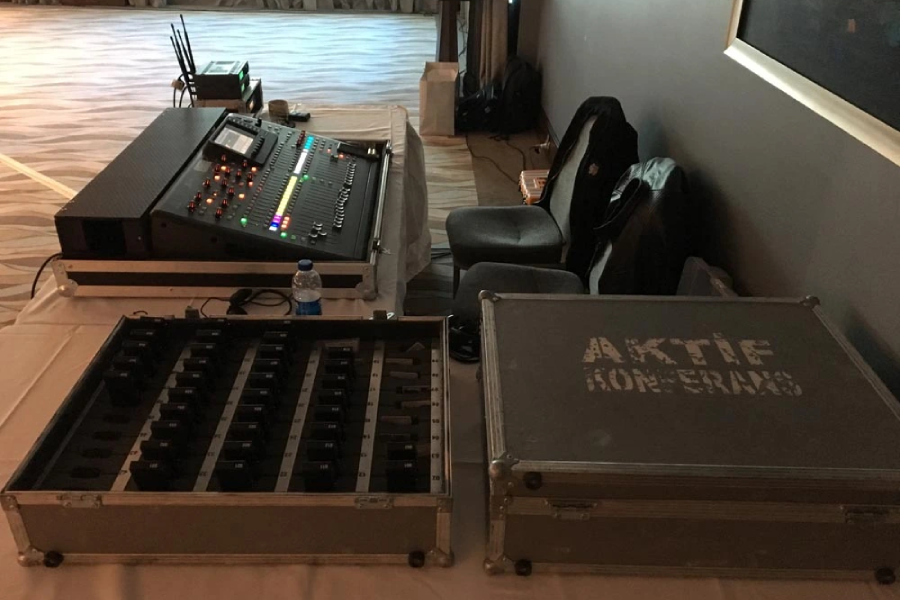
This is the technical infrastructure that transmits the translation done by the interpreter to the receiving devices. Signal strength, channel arrangement, and sound level are managed through these systems. A professional technical team monitors the stable operation of the system throughout the meeting.
In Which International Meetings is Simultaneous Interpretation Used?
Simultaneous interpretation systems can be used in many types of meetings with participants from different languages. The content of the meeting may be formal, commercial, academic, or corporate. The important thing is to ensure that participants understand the speeches correctly.
Diplomatic Meetings
Simultaneous interpretation is of great importance in meetings held between state institutions, embassies, international organizations, and official delegations. In such meetings, it is necessary to translate the statements accurately and to avoid wasting time.
Multinational Company Meetings
Management meetings, dealer meetings, training programs, and strategy discussions of global companies may include participants from different countries. The simultaneous interpretation system ensures that all participants follow the same content simultaneously.
International Business Meetings
Accurate communication is critical in commercial agreements, investment meetings, industry meetings, and business forums. Simultaneous interpretation makes the communication process between parties more fluid and professional.
Academic and Technical Meetings
In scientific meetings, expert panels, and technical workshops, accurate understanding of the terminology used is essential. Experienced interpreters and high-quality technical infrastructure should be used together in such meetings.
How Does Simultaneous Interpretation Make Meeting Flow More Efficient?
Time management is crucial in international meetings. In consecutive interpreting, the speaker pauses at certain intervals while the interpreter translates. This method can be used in small meetings, but it can extend the duration in large and busy organizations.
In simultaneous interpretation, the speech and translation proceed simultaneously. This prevents interruptions to the meeting schedule. Participants follow the speaker in their own language without waiting. This structure increases meeting efficiency, especially in panel, question-and-answer, presentation, and discussion sections.
Furthermore, simultaneous interpretation allows participants to be more actively involved in the meeting. Because participants understand the speeches in real time, they can ask their questions more accurately, participate in discussions more easily, and evaluate decisions more clearly.
What to Consider When Planning a Simultaneous Interpretation System?
When planning a simultaneous interpretation system for international meetings, not only the number of devices but also the entire technical structure of the meeting should be considered. Preparation is crucial for a successful system setup.
First, the number of languages to be used in the meeting should be determined. Each language may require separate interpreters, channels, and technical arrangements. The number of participants is also important in terms of receiving devices and headset planning. Insufficient equipment planning can negatively impact participant satisfaction during the meeting.
The structure of the meeting room should also be evaluated. The location of the interpretation booth should be planned to allow for a view of the speaker and the stage. The sound system, microphone setup, and simultaneous interpretation system must work together harmoniously.
A technical test must be conducted before the event. Microphones, headsets, receiving devices, language channels, and sound levels should be checked. These tests can prevent technical problems that may arise during the meeting.
Why is Professional Technical Support Important?
Simultaneous interpretation systems are technically sensitive systems. Sound interruptions, channel confusion, or receiving device problems during the meeting can make it difficult for participants to follow the speeches. Therefore, professional technical support is essential throughout the event.
The technical team sets up the system, performs tests before the meeting, and monitors the system throughout the organization. Distributing receiver devices to participants, channel routing, and device checks are also part of the technical operation.
Professional technical support ensures the smooth running of the meeting. Quick response to potential problems strengthens the organization's credibility and professional image.
Simultaneous Interpretation Services for International Meetings with Aktif Conference
Establishing the right communication infrastructure in international meetings directly impacts the success of the organization. High-quality simultaneous interpretation systems should be used to ensure that participants from different languages can follow the same content accurately and simultaneously.
Aktif Conference offers professional simultaneous interpretation system rental and technical support services for international meetings. Interpretation booths, receivers, headphones, microphones, and transmitter systems are planned according to the meeting's needs. Thanks to the installation and operation support provided by our experienced technical team, the system operates seamlessly throughout the meeting.
This allows participants to comfortably follow the speeches in their own languages, the meeting flows smoothly, and the organization achieves a more professional structure.
Reliable and Uninterrupted Translation Infrastructure in International Communication
Effective communication in international meetings is possible not only through the speakers' delivery but also through the accurate understanding of this delivery by all participants. A well-planned simultaneous interpretation infrastructure prevents wasted time, allows participants to engage more actively in the meeting, and ensures that the topics discussed are understood by everyone. Simultaneous interpretation systems, used with high-quality equipment, an experienced technical team, and professional installation support, significantly improve the communication quality of international meetings.
Therefore, in meetings with multilingual participants, simultaneous interpretation services should be considered one of the organization's essential technical needs.