Saray Cumhuriyet Mahallesi Şehit Ali Aktaş Caddesi 23/D Pursaklar/Ankara
  +90 312 496 51 91
  info@aktifkonferans.com.tr


What Is A Simultaneous Interpretation System And How Does It Work?
The gathering of participants speaking different languages at international events increases the need for professional communication solutions. At congresses, conferences, seminars, diplomatic meetings, and corporate events, it is crucial that the information conveyed by speakers is accurately understood by all participants. In this regard, simultaneous interpretation systems stand out as one of the most important technical infrastructures for multilingual organizations.
A simultaneous interpretation system is a professional system that enables the speaker's speech to be translated into different languages simultaneously and transmitted to participants via headphones. Thanks to this system, the flow of the speech is not interrupted, and participants can follow the speech in their own languages in real time. Especially in large organizations where time management is critical, simultaneous interpretation contributes to a more efficient and professional event.
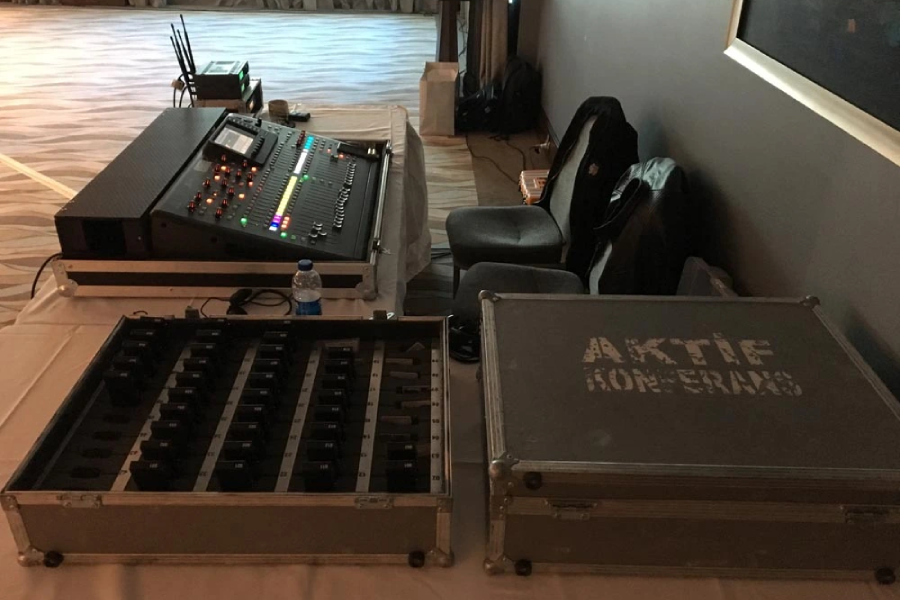
Aktif Konferans strengthens the communication infrastructure of organizations by providing professional equipment, technical installation, and operational support for simultaneous interpretation systems used in congresses, conferences, and international events.
What is a Simultaneous Interpretation System?
A simultaneous interpretation system is a technical and professional translation infrastructure that enables the speaker's words to be translated into another language simultaneously by an interpreter. In this system, the interpreter listens to the speaker's voice through headphones and simultaneously translates it into the target language. The translation is then transmitted to the participants via receiver devices and headphones.
The most important feature of simultaneous interpretation is that the speech and translation occur simultaneously. This eliminates the need for the speaker to wait for the interpreter to translate. The event flows naturally while participants follow the speech in their own language.
This system provides great convenience, especially in organizations where multiple languages are used. For example, a speech given in Turkish can be simultaneously translated into English, German, French, or other languages. Participants can listen to the speech in their desired language by selecting the relevant language channel on their receiver device.
How Does the Simultaneous Interpretation System Work?
The working principle of the simultaneous interpretation system is based on accurately capturing the sound, transmitting it to the interpreter, performing the translation, and transmitting it to the participants. This process requires a fast, uninterrupted, and technically compatible infrastructure.
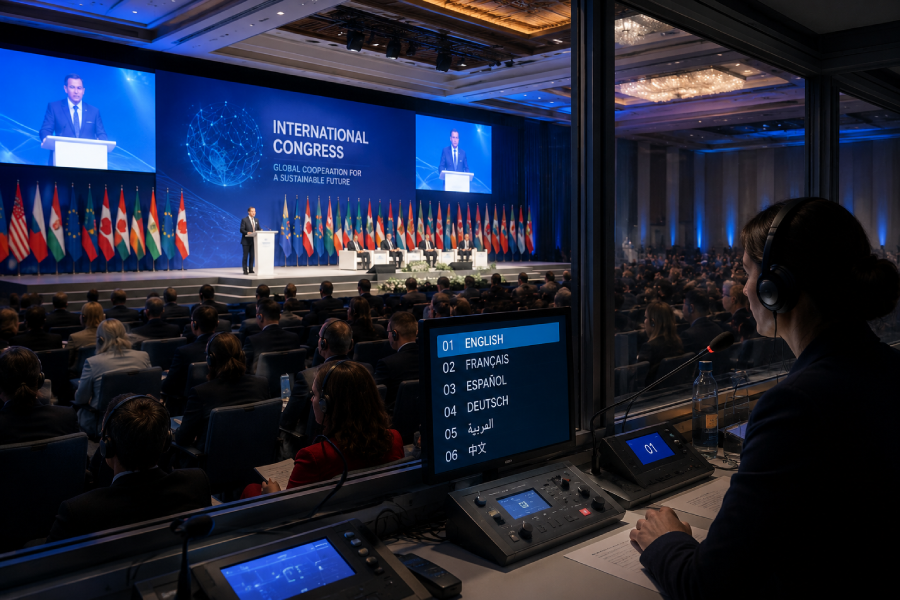
The speaker speaks through a microphone on stage or at the podium. This sound is transmitted through the sound system to the interpreter booth. The interpreter listens to the speaker through headphones in a private booth and translates the speech into the target language in real-time. The interpreter's translation is transmitted to the simultaneous interpretation system via a microphone. This audio is then sent through the transmitter system to the receiver devices used by the participants.
Participants listen to the translation through the headphones and receiver devices provided to them. If there is more than one language at the event, participants can select their own language using the channel selection on the device. This structure allows translation into multiple languages simultaneously.
For this system to function properly, sound quality, signal transmission, booth placement, and the technical control process must be professionally planned.
Basic Equipment Constituting the Simultaneous Interpretation System
The simultaneous interpretation system consists of many different pieces of equipment working together. Each piece of equipment plays an important role in the uninterrupted operation of the system.
Interpretation Booth
The interpretation booth is the private area where interpreters listen to the speech and translate. These booths have soundproof structures, allowing the interpreter to work without being affected by external noises. Booth comfort is of great importance, especially in long congresses and conferences, so that interpreters can maintain their concentration.
Interpreter Microphone and Headset
The interpreter listens to the speaker's voice through headphones and transmits the translation to the system via the microphone. Using high-quality microphones and headphones ensures both the interpreter's comfort and clear audio for the participants.
Receiver Devices
These are portable devices that allow participants to listen to the translation. Each participant is given a receiver device. The language channel can be selected via the device, and the translation can be listened to through headphones.
Headphones
Headphones allow participants to hear the translation clearly. High-quality headphones are particularly important for listening comfort in long-duration events.
Transmitter Systems
This is the technical system that transmits the interpreter's translation to the participants' devices. The robust and uninterrupted operation of transmitter systems is critical to ensuring the translation flow remains uninterrupted throughout the event.
The Difference Between Simultaneous and Consecutive Interpreting
Although simultaneous and consecutive interpreting are often confused, there are significant differences between the two methods. In consecutive interpreting, the speaker speaks for a certain period, then pauses, and the interpreter translates what was said into another language. This method may be suitable for smaller meetings or short discussions.
In simultaneous interpreting, the speaker does not pause. The interpreter translates the speech simultaneously, and participants listen to the translation in real time. This method saves time, especially in large organizations. This is the main reason why simultaneous interpreting is preferred in congresses, conferences, and international seminars.
While consecutive interpreting proceeds more slowly, simultaneous interpreting continues the flow of the event without interruption. Therefore, in multi-participant and multilingual organizations, the simultaneous interpreting system offers a much more professional solution.
In Which Events is the Simultaneous Interpreting System Used?
The simultaneous interpreting system can be used in many organizations where different languages are spoken. This system is especially important in events with international participants.
Congresses and conferences are among the most common organizations where simultaneous interpretation systems are used. In academic meetings, medical congresses, business conferences, and official meetings, participants need to be able to follow speeches in their own languages.
International company meetings are also an area where simultaneous interpretation systems are needed. These systems are used to ensure accurate communication between managers, employees, or business partners from different countries.
Simultaneous interpretation systems can also be used in diplomatic meetings, press conferences, training seminars, trade fairs, and product launch events. A proper translation infrastructure is crucial for the event to appear professional and for all participants to be involved.
Advantages of Simultaneous Interpretation Systems
The most important advantage of simultaneous interpretation systems is that they do not interrupt the flow of the event. Translation is done simultaneously while the speaker continues their presentation. This saves time, especially in events with busy schedules.
Another important advantage is that it enhances the participant experience. Because participants can follow speeches in their own languages, they can focus on the event more easily. When the language barrier is eliminated, information transfer becomes more efficient.
Simultaneous interpretation systems also enhance the professional image of an organization. Providing a high-quality translation infrastructure at an event with international participants increases the corporate value of the organization.
The main advantages offered by this system are:
- It does not interrupt the flow of speech
- It provides instant communication in different languages
- It helps participants follow the event more easily
- It creates a professional image in international organizations
- It facilitates time management
However, to obtain these advantages, the system must be installed with the right equipment and by an experienced technical team.
Why is Technical Planning Important in Simultaneous Interpretation Systems?
In simultaneous interpretation systems, technical planning directly affects the success of the event. Because this system does not only consist of devices; it also includes details such as sound infrastructure, booth placement, signal distribution, and the management of participant devices.
Before the event, it should be determined how many languages will be translated, how many participants will use receiving devices, where the interpreter booths will be placed, and how the sound system will be integrated. If this information is not planned correctly, sound interruptions, channel confusion, or technical malfunctions may occur during the event.
Professional technical teams examine the event area and plan the most suitable system. After installation, all devices are tested and a rehearsal is conducted before the event. This process allows for the early identification of potential problems.
Active Conference and Professional Simultaneous Interpretation Systems
A simultaneous interpretation system is a critical infrastructure for healthy communication in international organizations. Therefore, it is essential that the devices used are of high quality and that the system is installed by experienced teams.
Active Conference offers professional simultaneous interpretation system solutions for congresses, conferences, meetings, and international events. From translation booths to receiver devices, from headphones to technical control systems, the entire process is planned according to the needs of the event.
Thanks to the installation and operation support provided by the experienced technical team, the translation system works seamlessly throughout the event. This creates a more efficient, understandable, and professional event experience for both organizers and participants.
Choosing the Right System for Strong Communication in International Organizations
Successful communication at international events is possible not only with good interpreters but also with the right technical infrastructure. Simultaneous interpretation systems enhance the quality of the event by allowing participants in different languages to follow the event simultaneously.
A well-planned simultaneous interpretation infrastructure allows speakers to reach a wider audience. Since participants follow the event in their own languages, information transfer becomes more effective. Therefore, simultaneous interpretation systems should be handled professionally in planning congresses, conferences, and international meetings.
Simultaneous interpretation systems used with quality equipment, correct setup, and experienced technical support make a strong contribution to ensuring that organizations meet international standards.